Tag: hiking

  • The GR131 (The Canary Islands)

    Key Details:

    • Length: 500+km (310+ miles).
    • Starting Point: Lanzarote.
    • Ending Point: El Hierro.
    • Typical Duration: 3-4 weeks

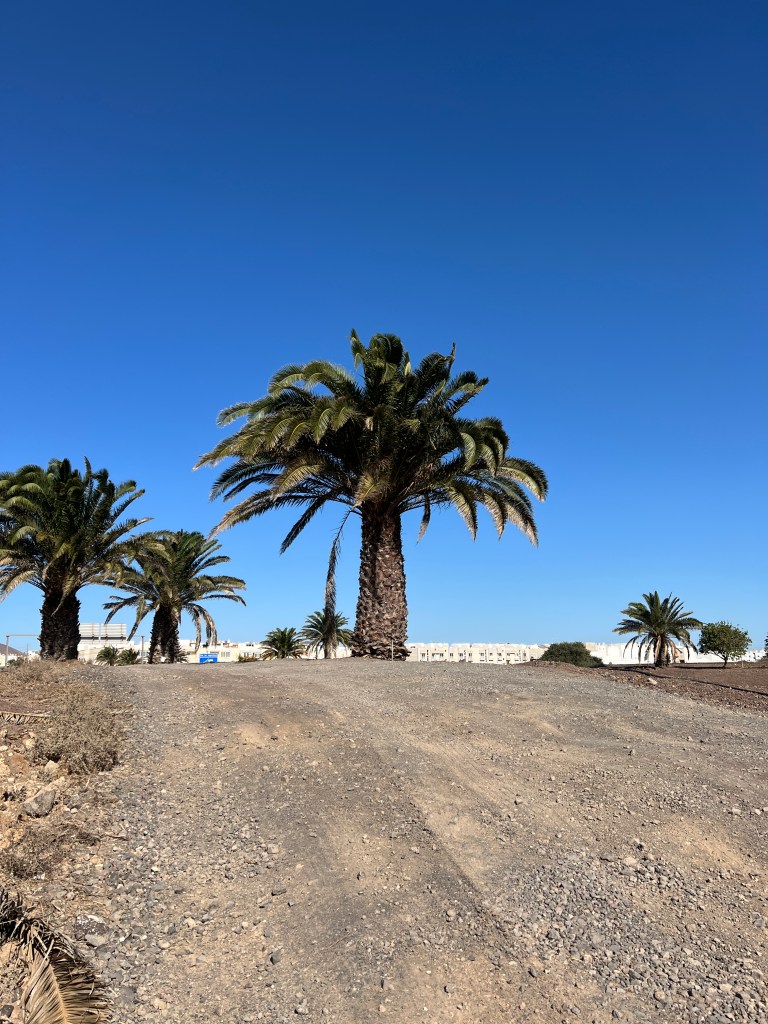
    I recently attempted the GR131, a 500+km trek across the Canary Islands, a set of autonomous Spanish islands off the west coast from Africa. The trek took me roughly 3 weeks and is known for its incredibly diverse microclimates and different ecosystems within such a small area. During my time on the island I traversed deserts, mountains and pine forests. Due to a volcanic eruption I was unable to visit the island of La Palma and ran out of time for El Hierro.

    Below are updates I made whilst on the trail that detail how I approached the GR131.
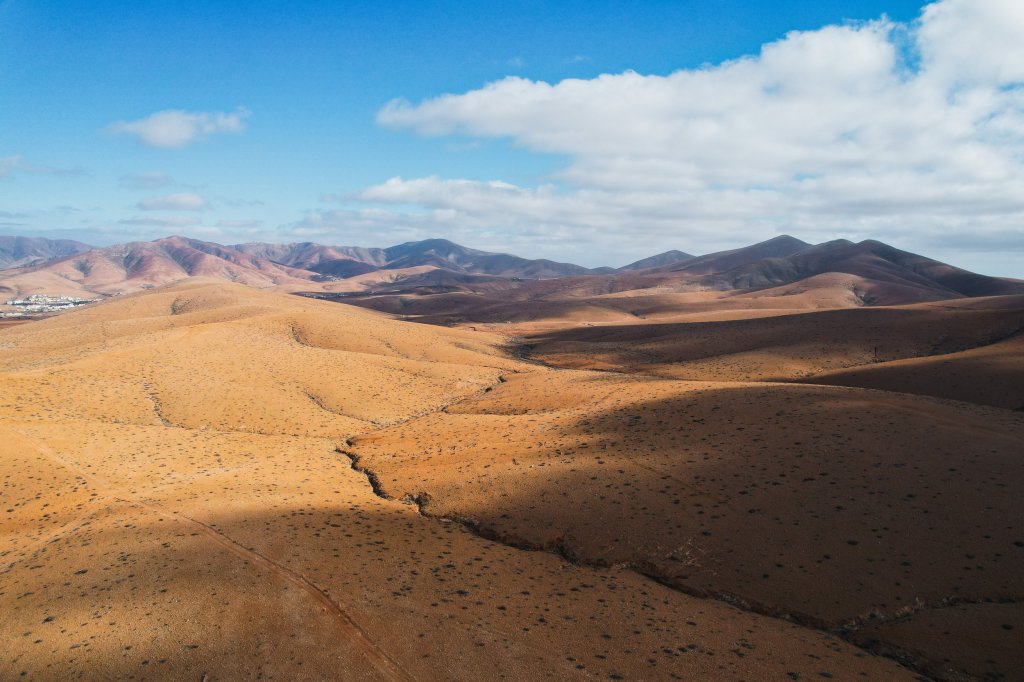
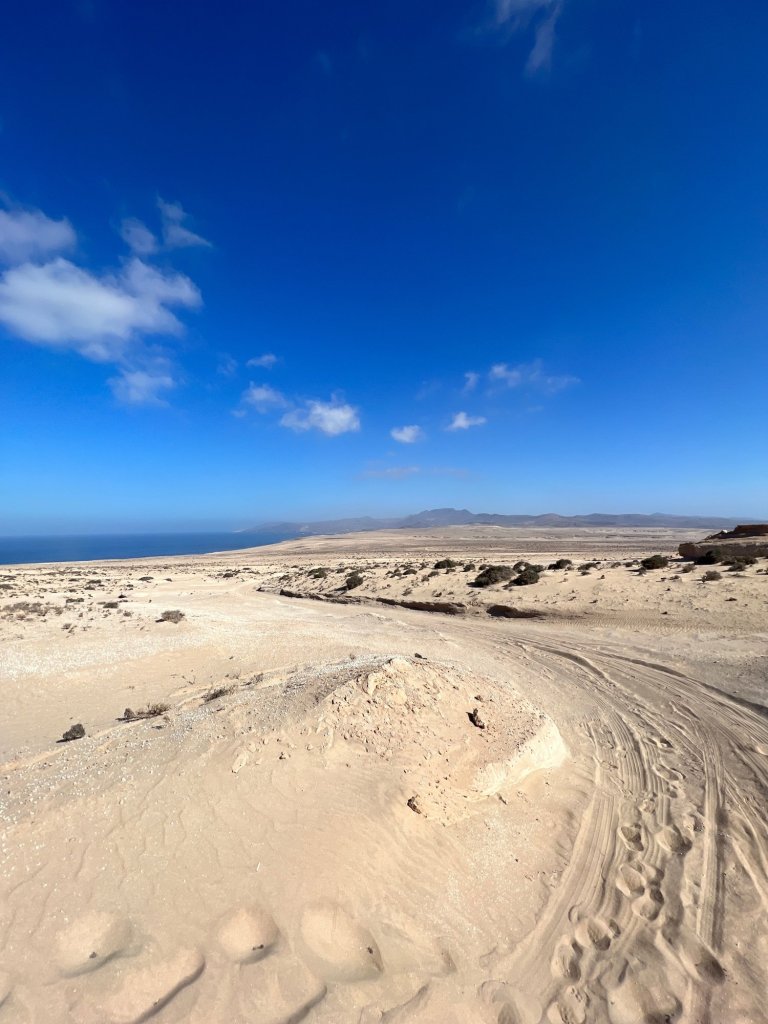
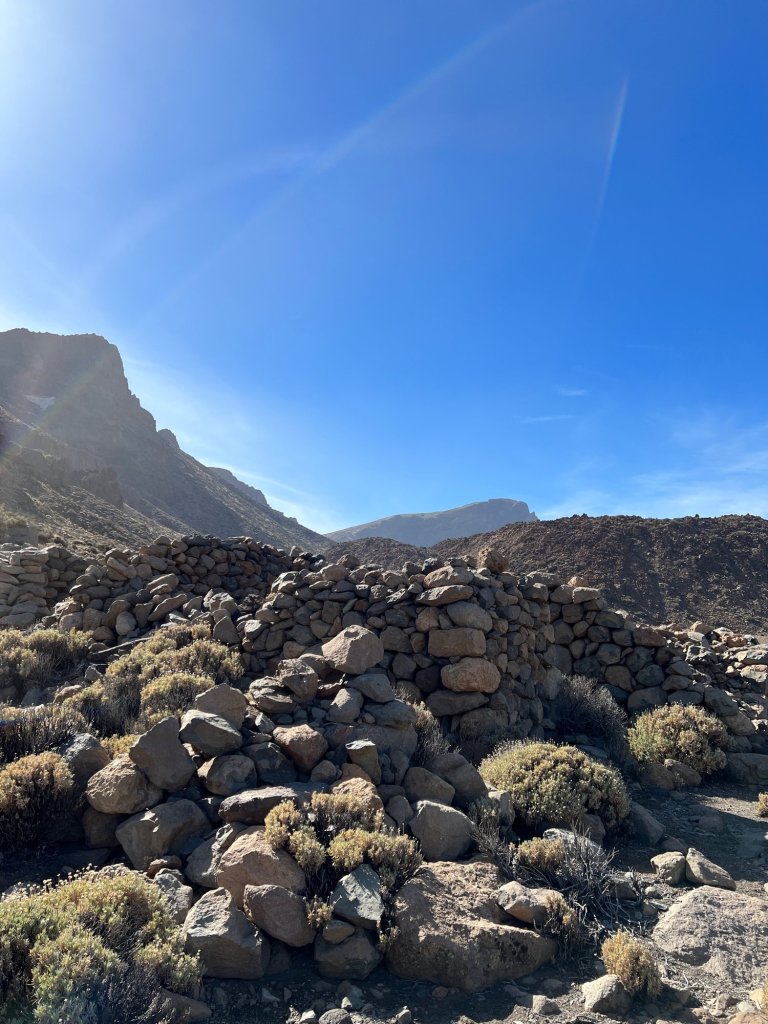
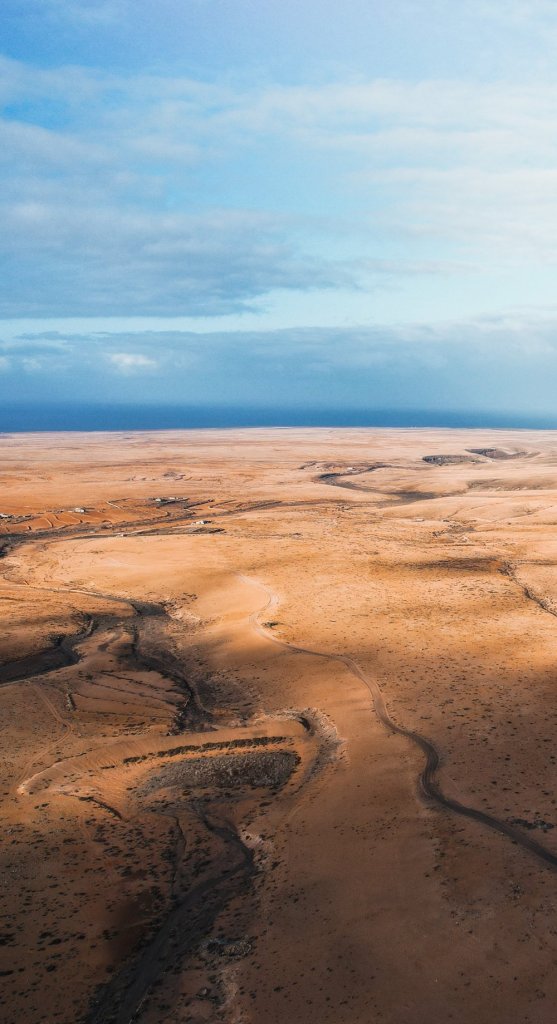
    The fuerteventura desert.

    Lanzarote – Island 1

    • 2.5 days
    • 78km (48 miles)

    On December 4th I flew from London to Arracife (capital of the island Lanzarote). I stay in a bnb overnight with the view of getting a bus to Orzola the following morning, the official starting point of the GR131.

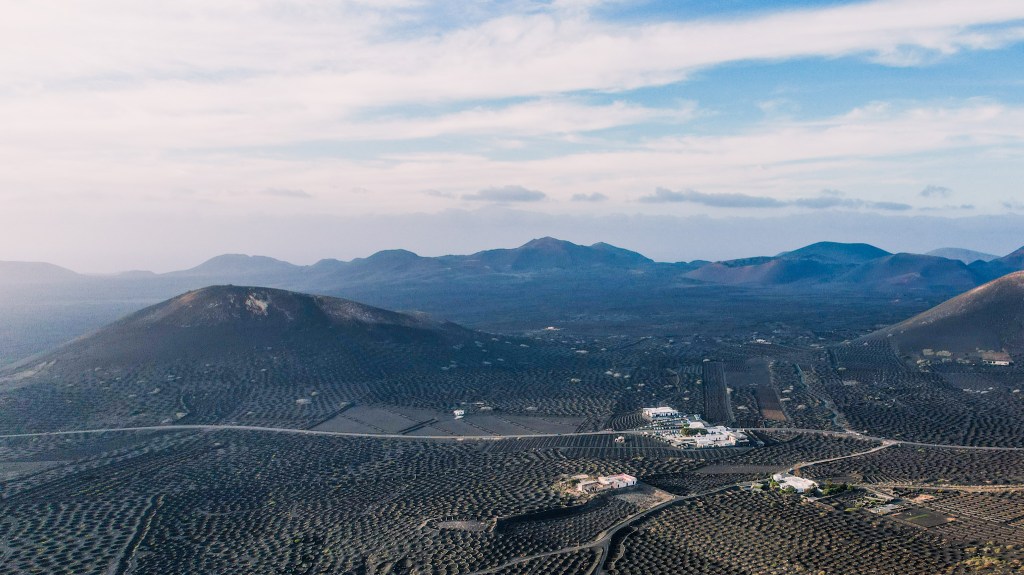
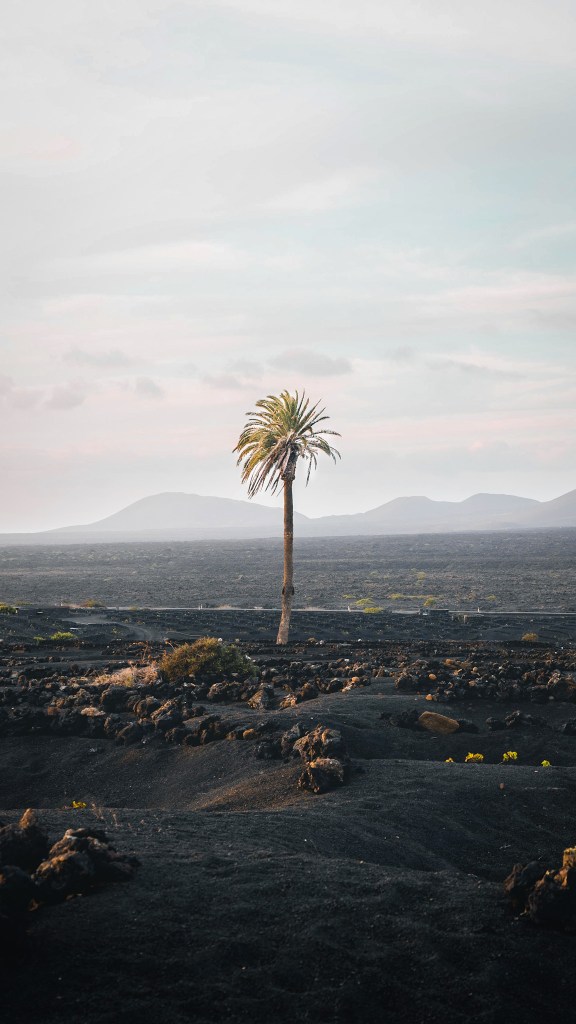
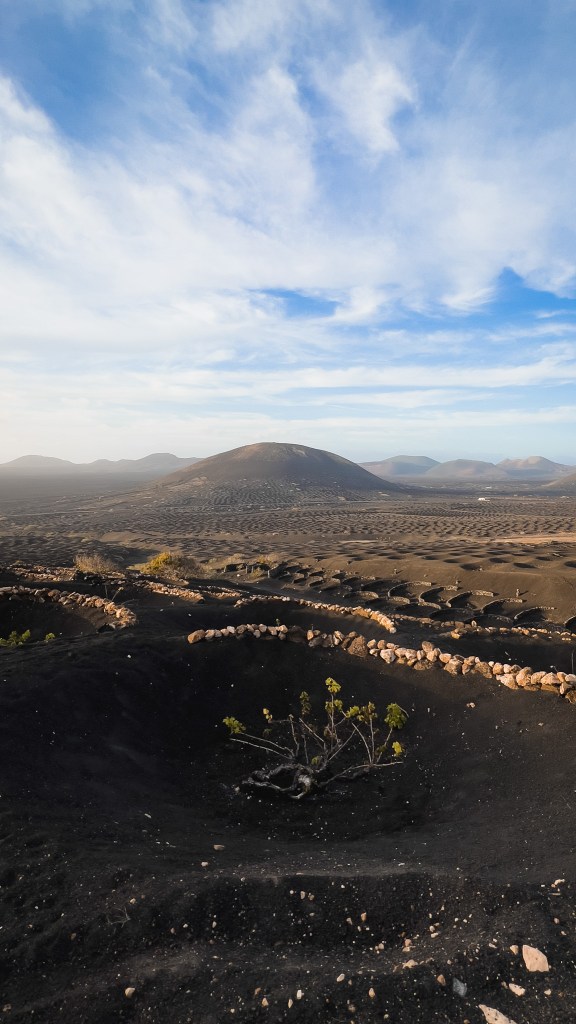
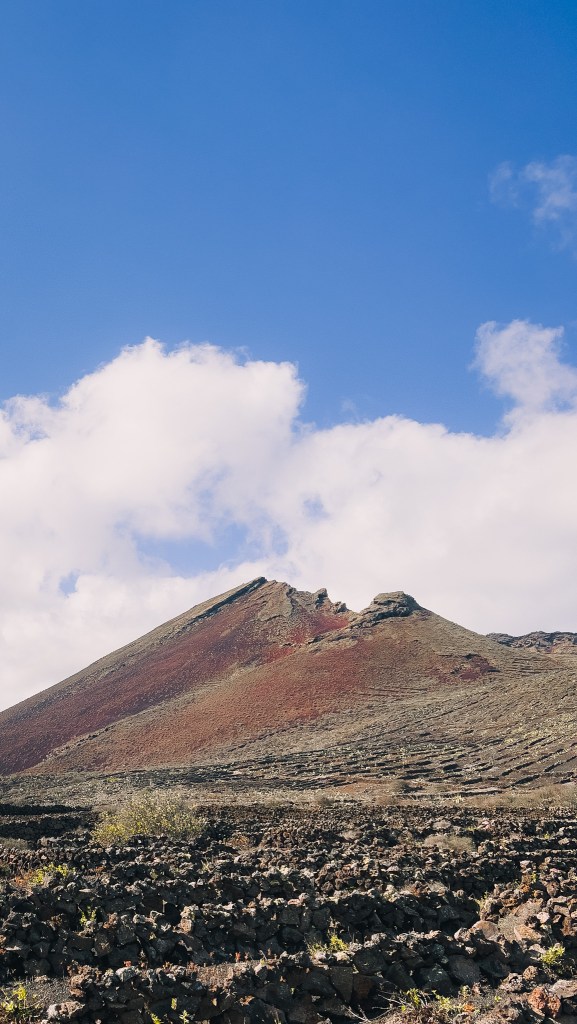
    I end up spending 2.5 days hiking 78km / 48 miles across the island. The island is covered in a beautiful black volcanic ash landscape, and is known for it’s unique wineries where the plants are grown in a dug crater to protect them from the whipping winds.
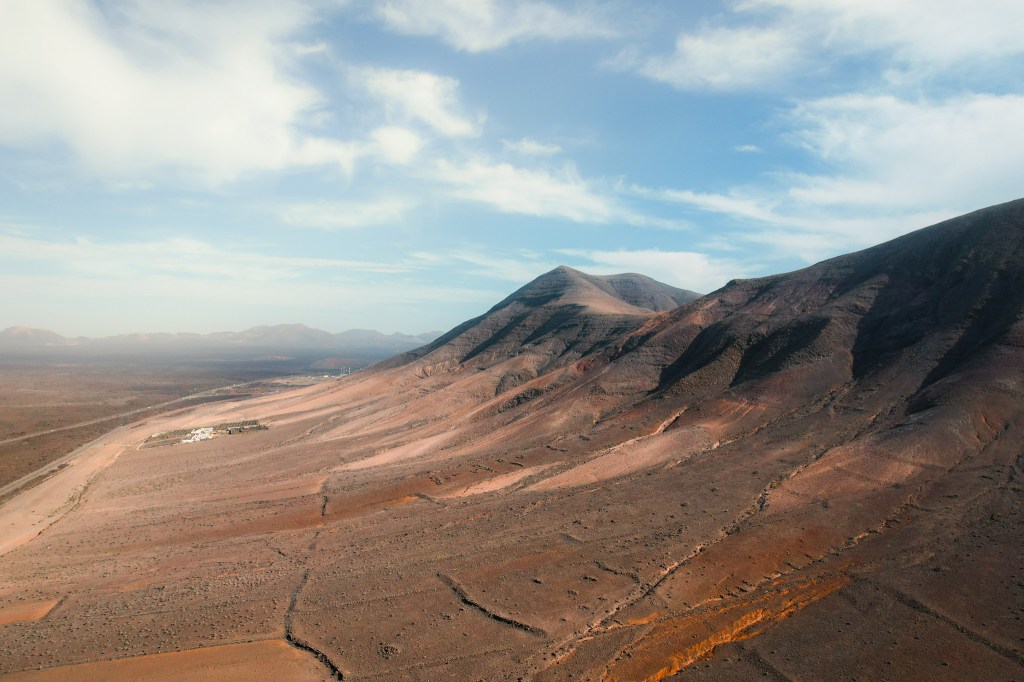
    FuerteventuraIsland 2

    • 5 days
    • 146km (90 miles)

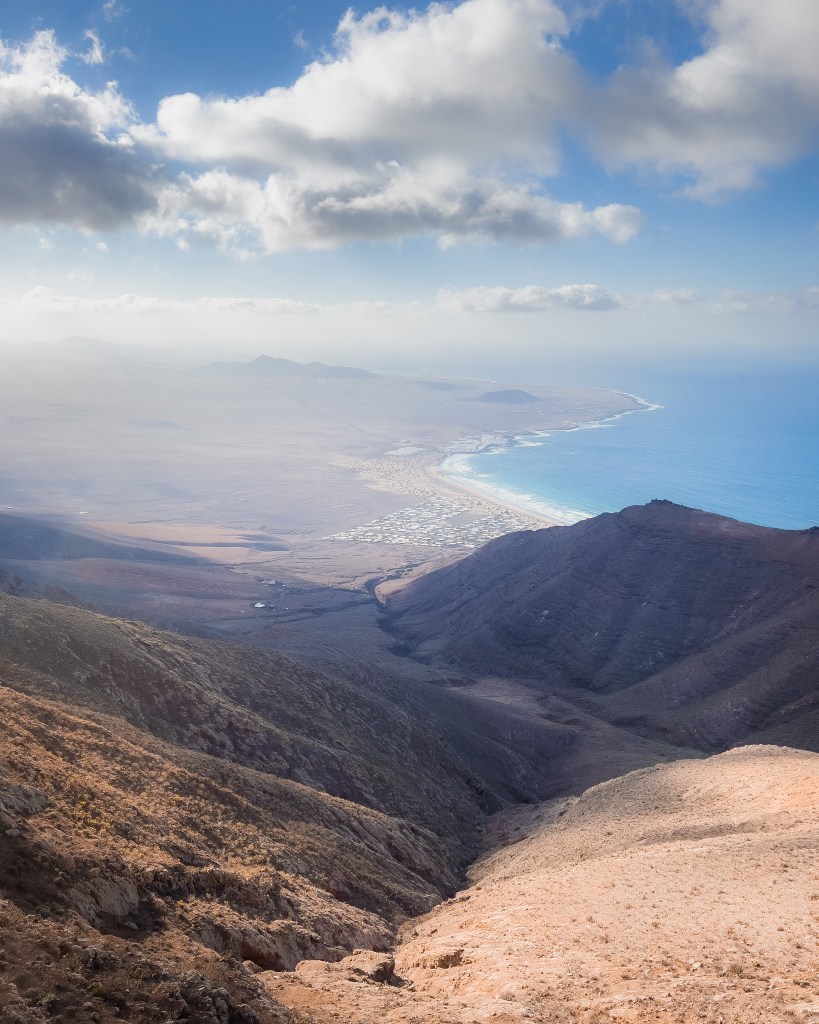
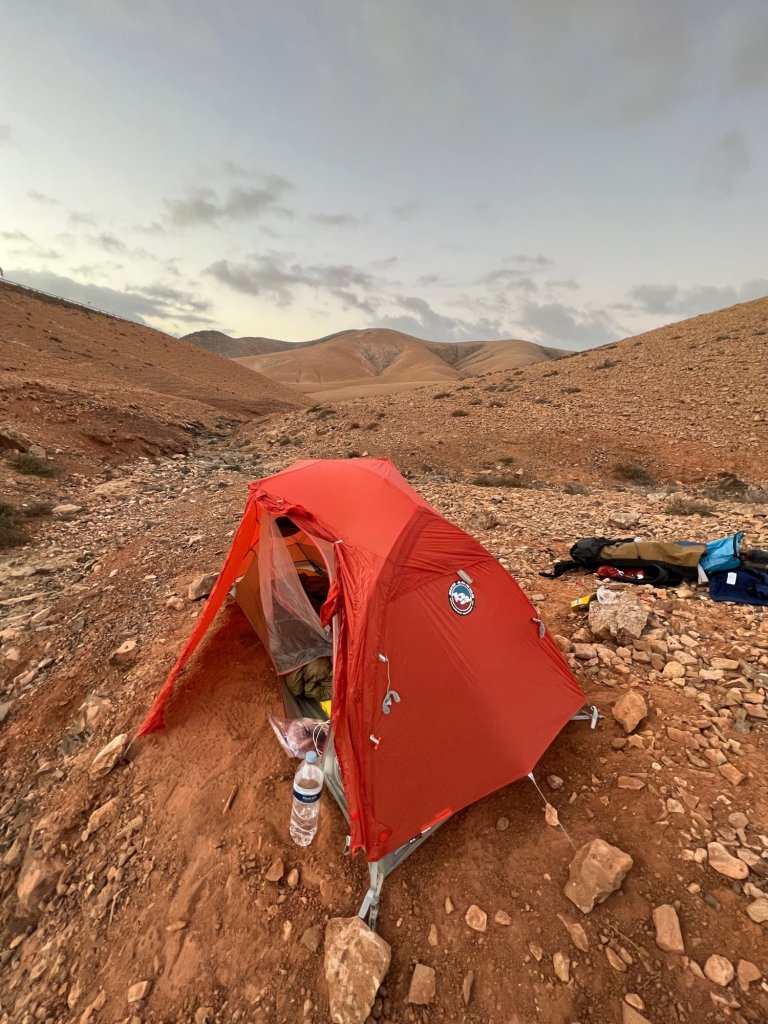
    Once I finish and arrive in the tourist town of Play Blanca on the third day, I get the early afternoon ferry over to Corralego on fuerteventura, island #2 along the GR131. I stay here for a night in a bnb before setting off the next morning to continue on. Fueteventura proves to be a punishing 146km / 90 miles through beautiful deserts, rocky mountains and isolated villages. I manage the island in 5 full days of trekking, and my body is feeling it after the back to back 30km days.
    Gran Canaria – Island 3

    • 4 days
    • 74km (46 miles)

    I stay in a bnb overnight in Morro Jable, before rising bright and early for a 7am ferry over to island #3, Gran Canaria.

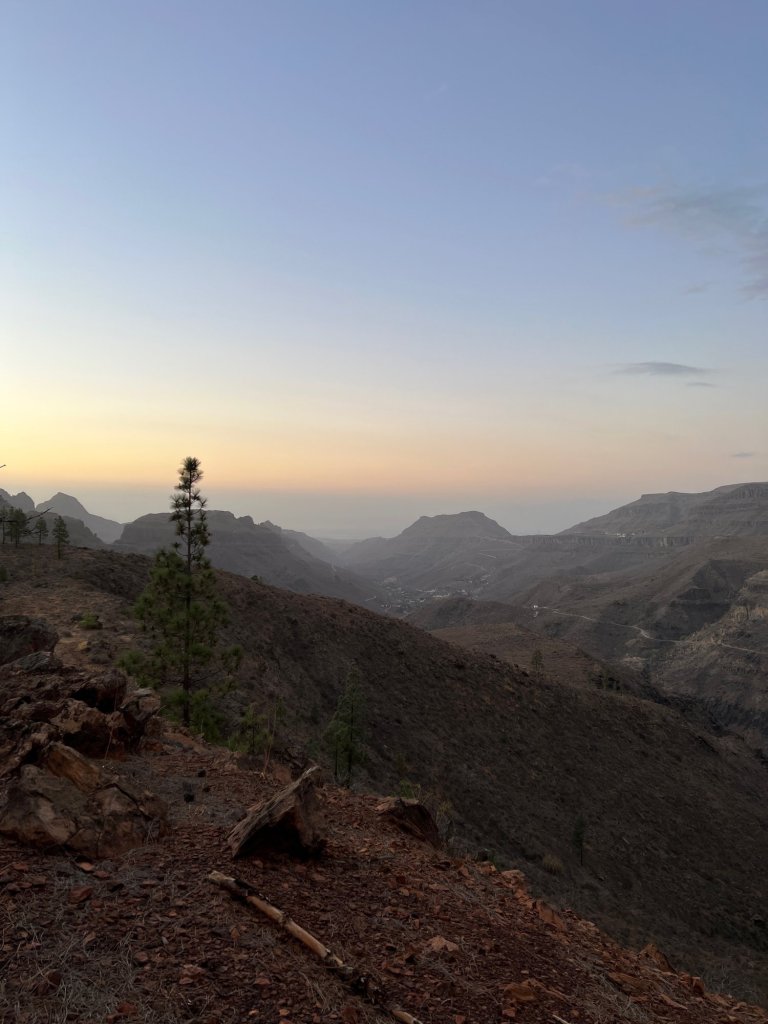
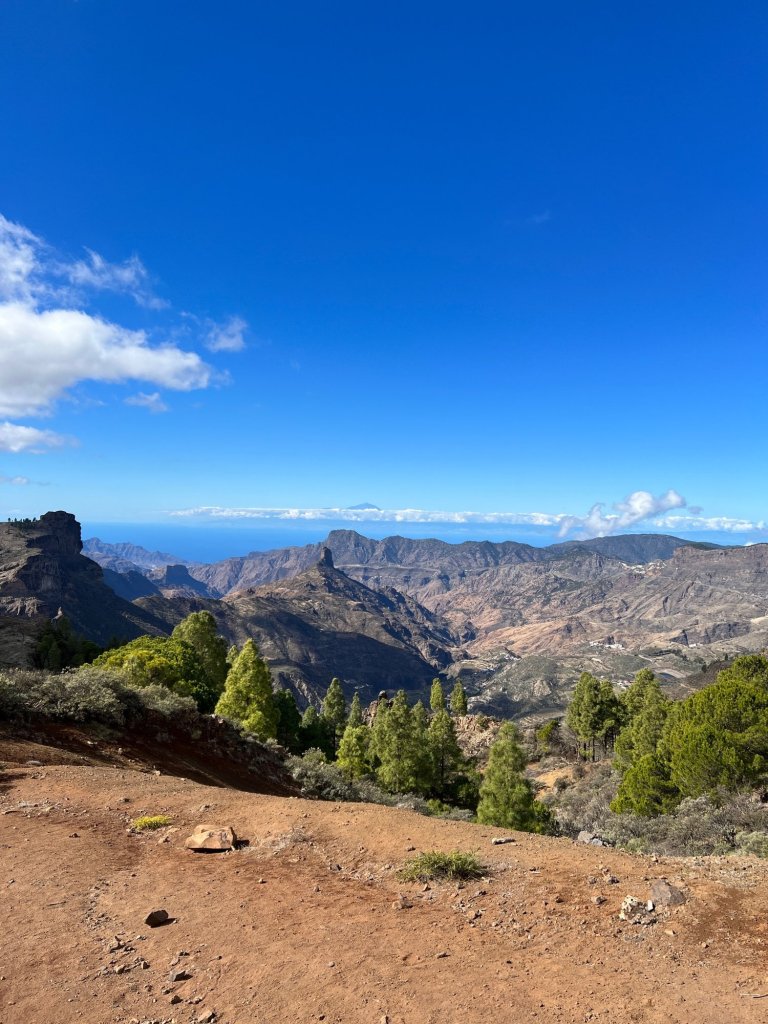
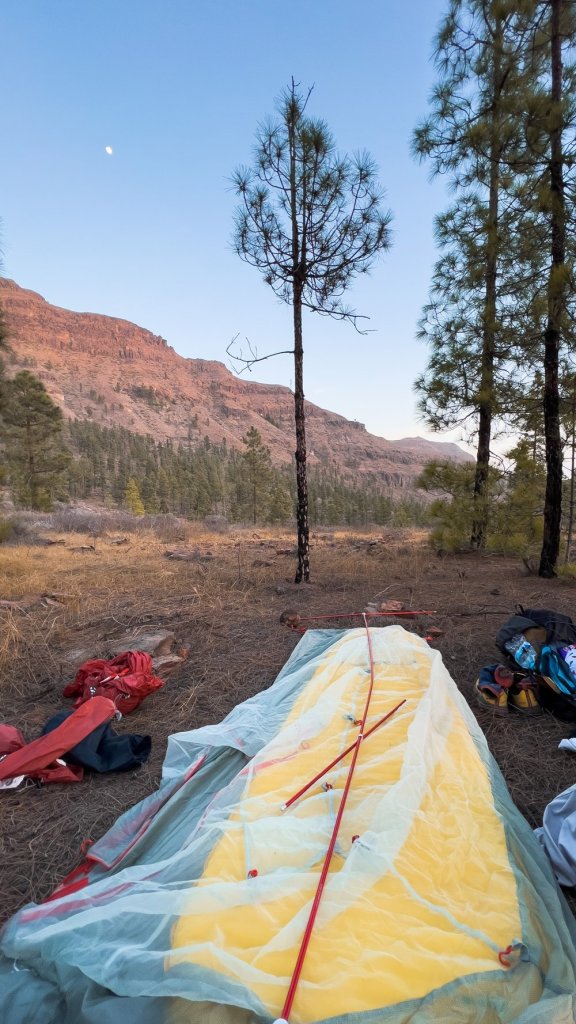
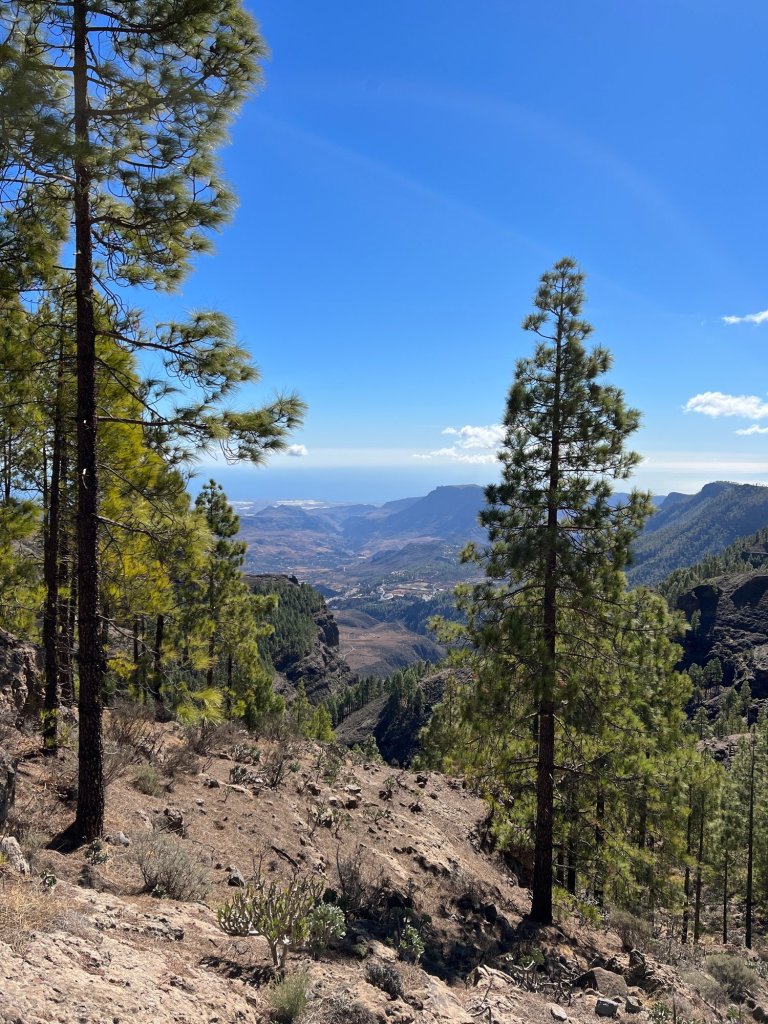
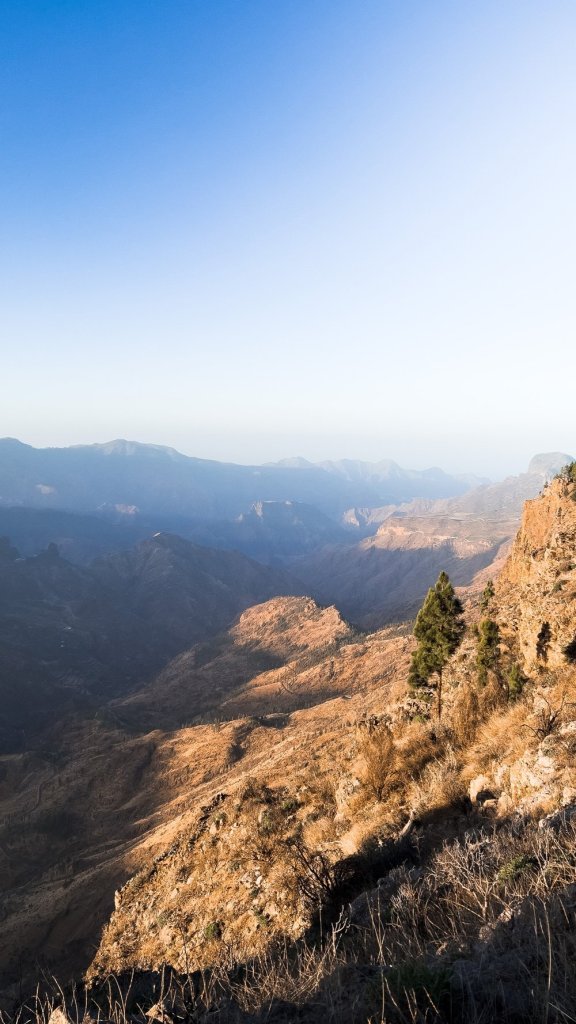
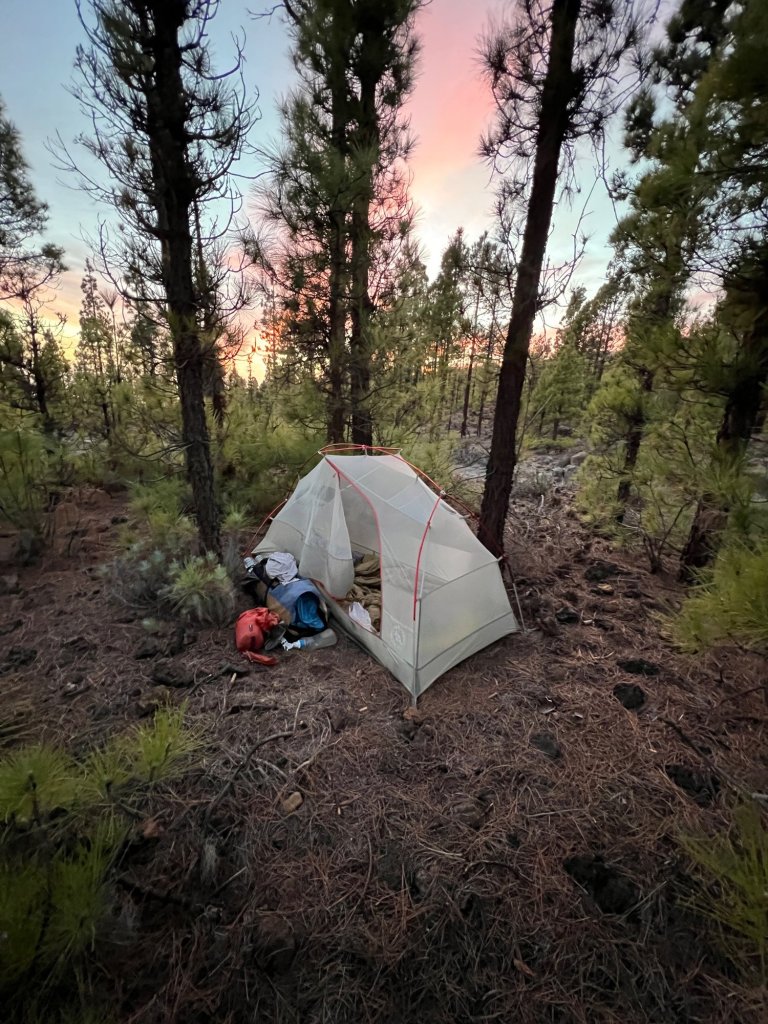
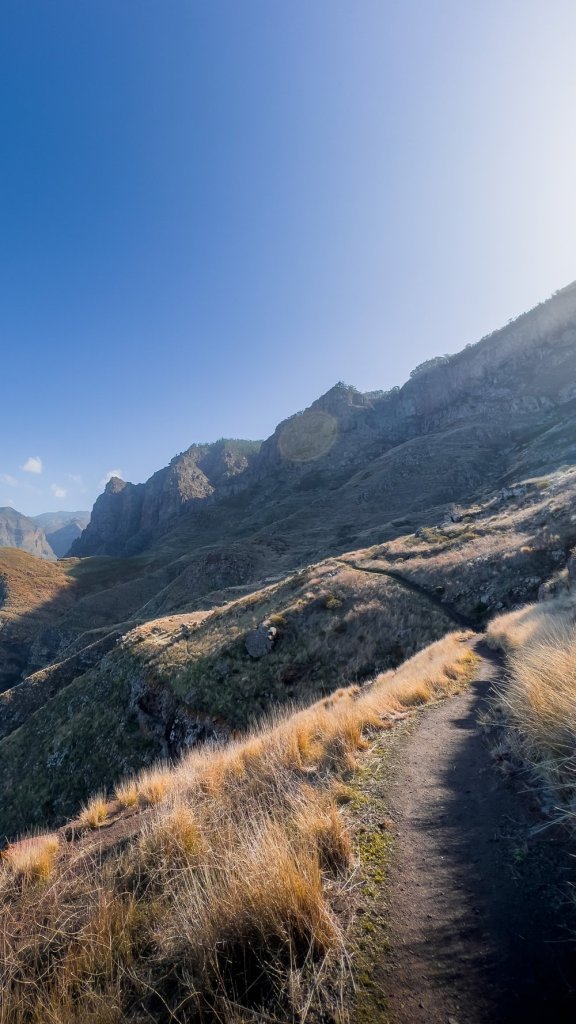
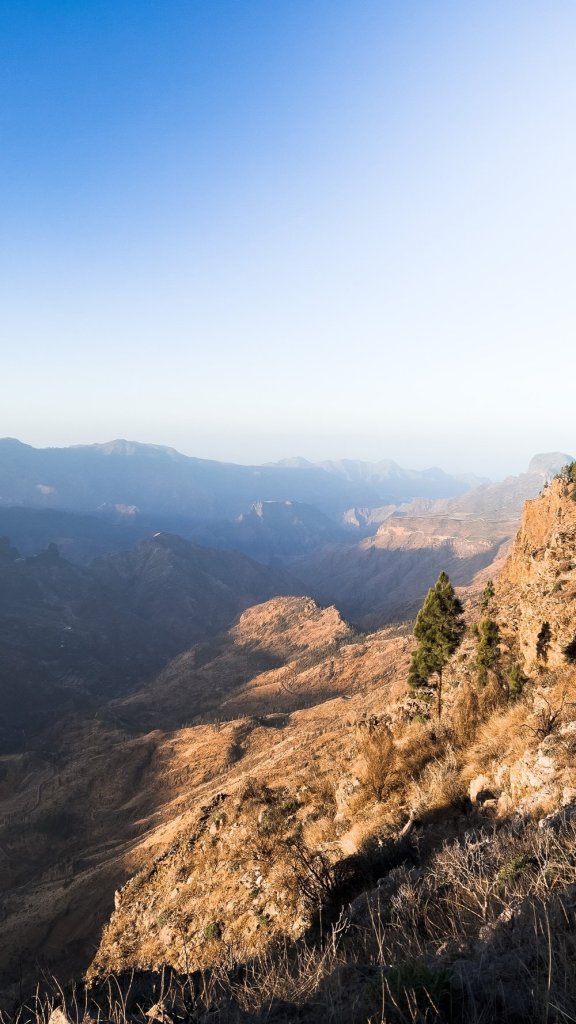
    Gran Canaria proves to be a completely different vibe compared to the prior two islands. Much more elevation, with more of an alpine feel with mountains and pine forests. The 74km (46 miles) and 2,850m (9,350ft) takes me 4 days to complete. 2 nights spent wild camping, 1 ngiht in a bnb. I start in the tourist town of Maspalomas (via bus from the capital city of Las Palmas – where the ferry takes you when arriving from Fueteventura). I hike up into the highland Cumbre region, in my opinion the best and most scenic part of the GR131 thus far. The change from desert to alpine is refreshing, and the drop in temperature is noted. On the final day I descend to Puerto De Las Nieves, where I get the ferry at 6pm over to island number 4; Tenerife.
    Tenerife – Island 4

    • 4 days
    • 93km (58 miles)

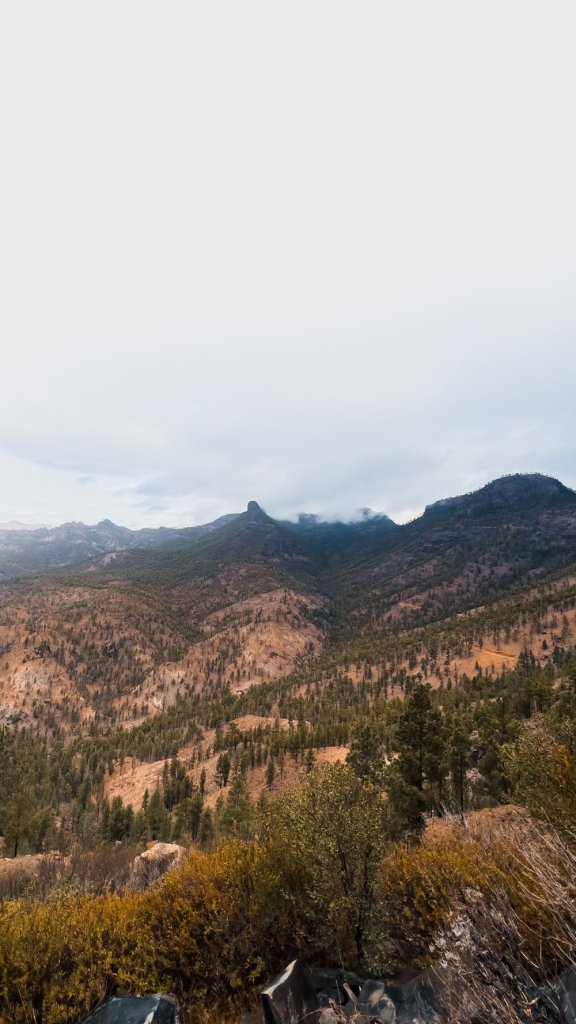
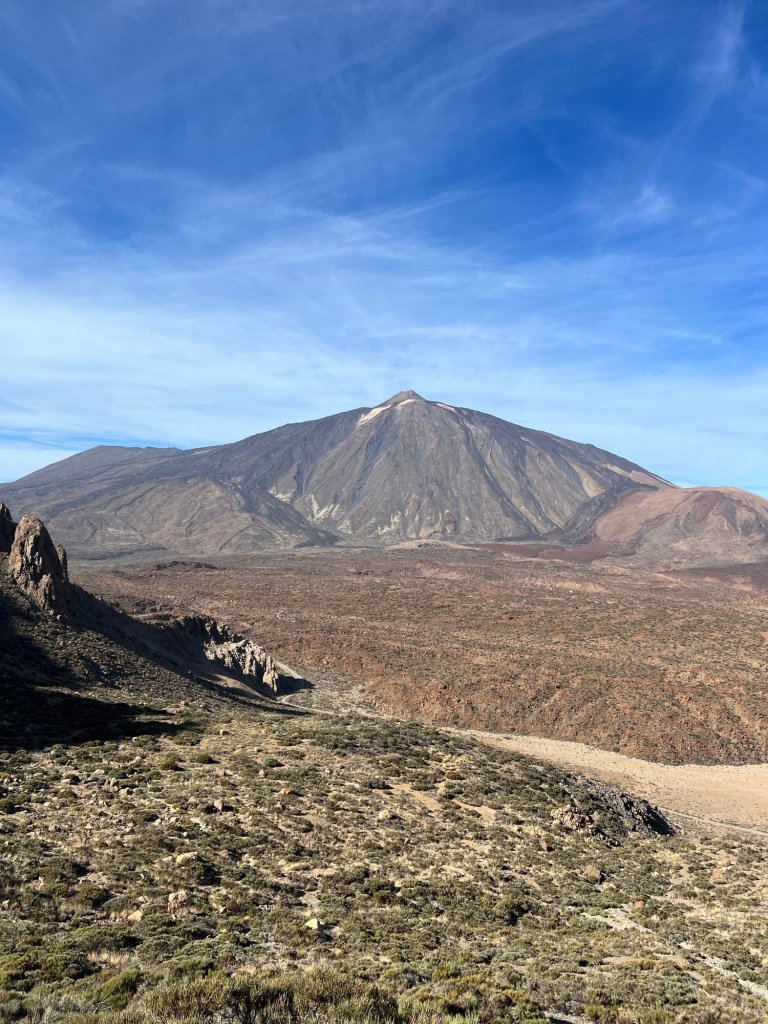
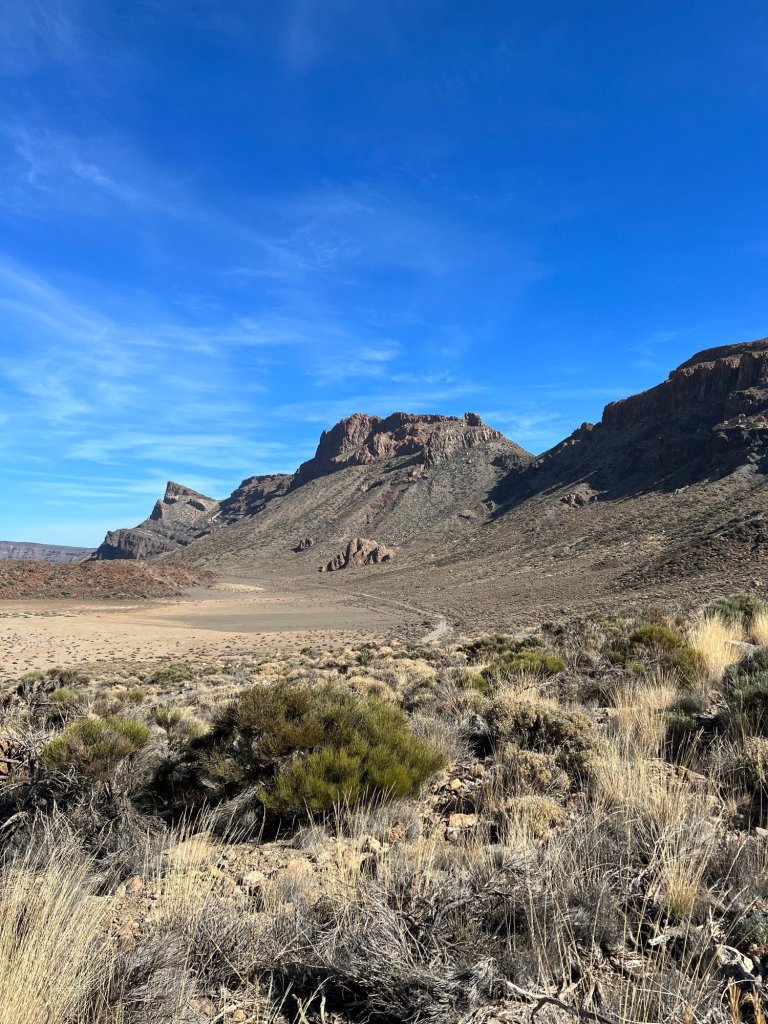
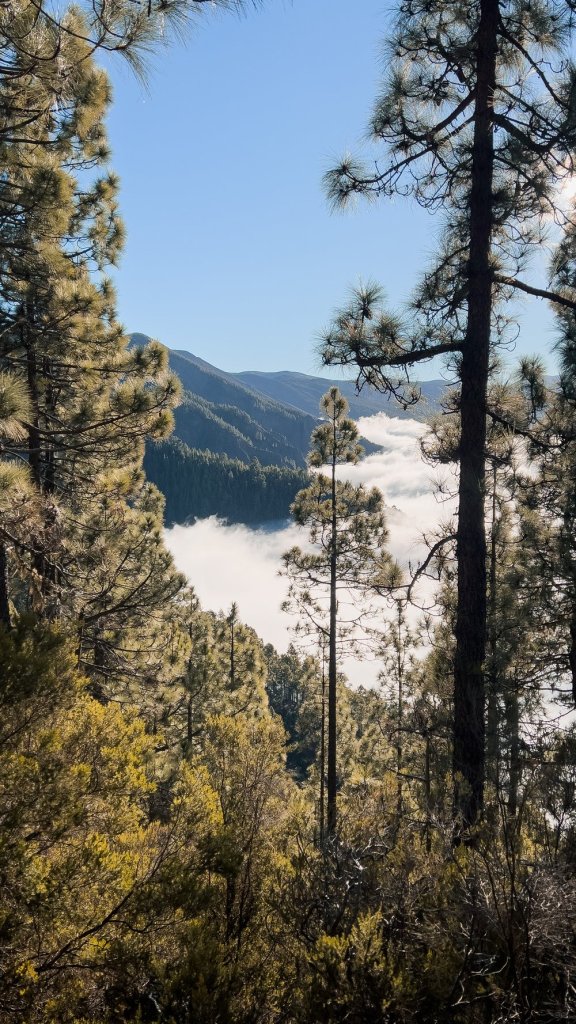
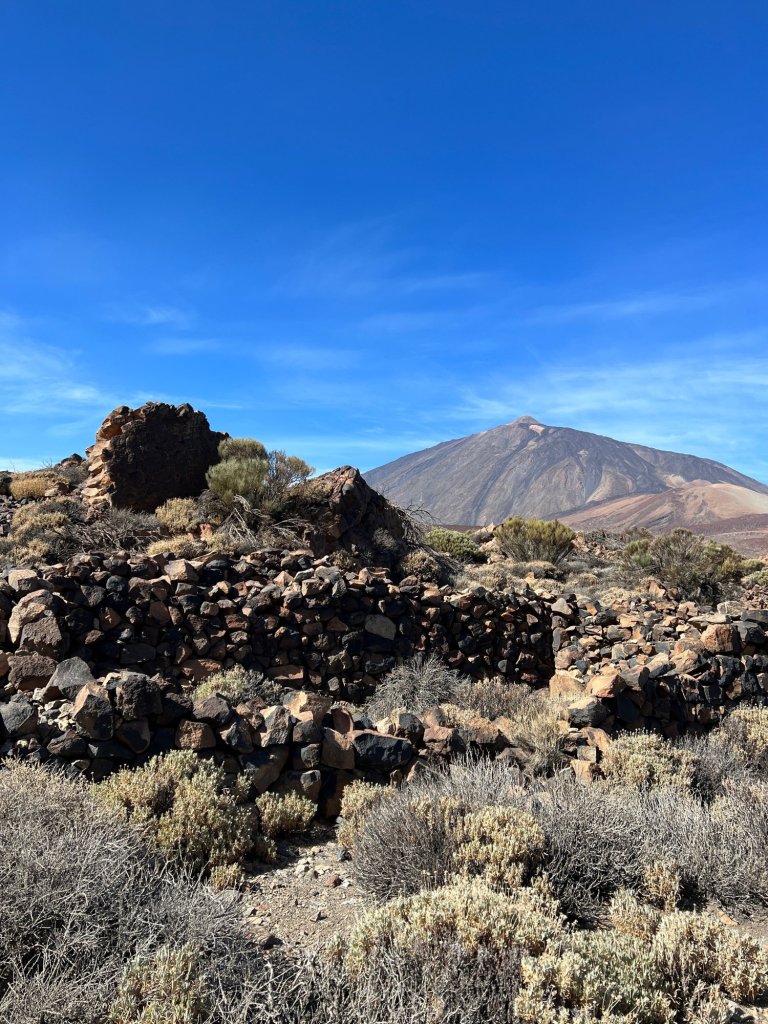
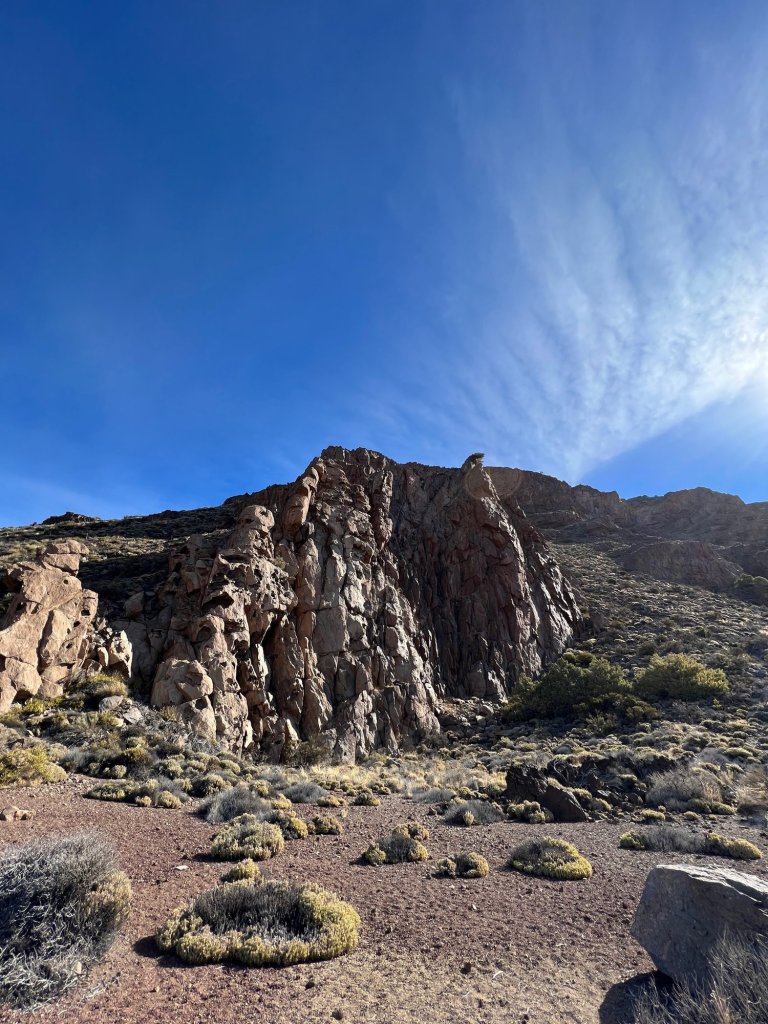
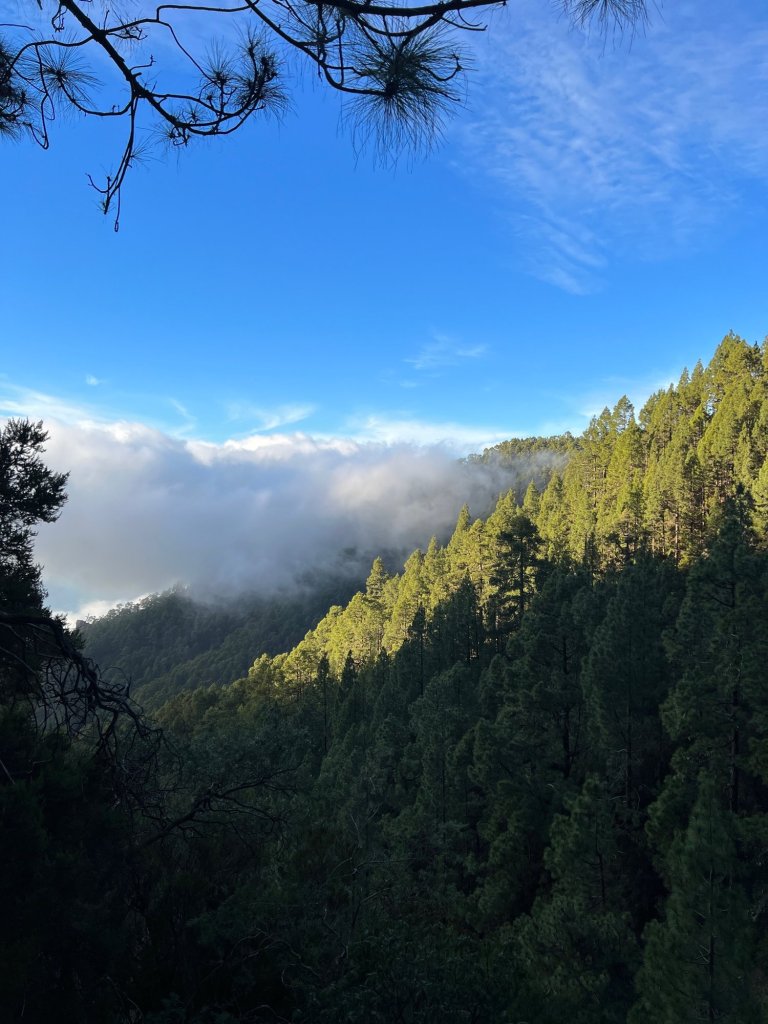
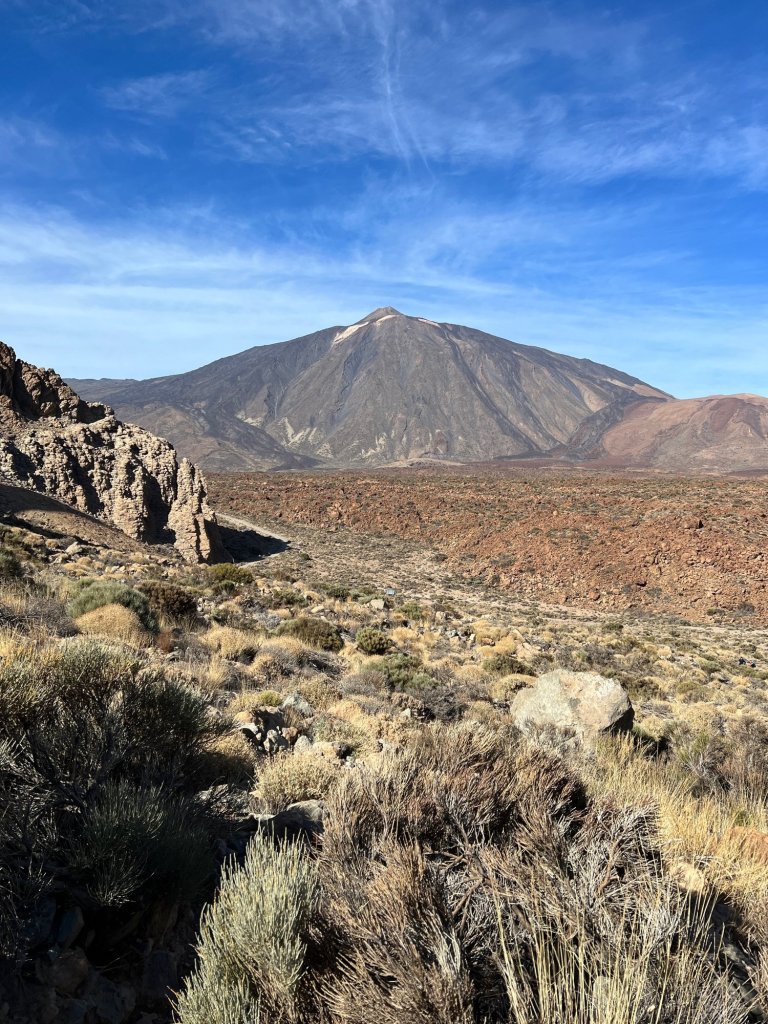
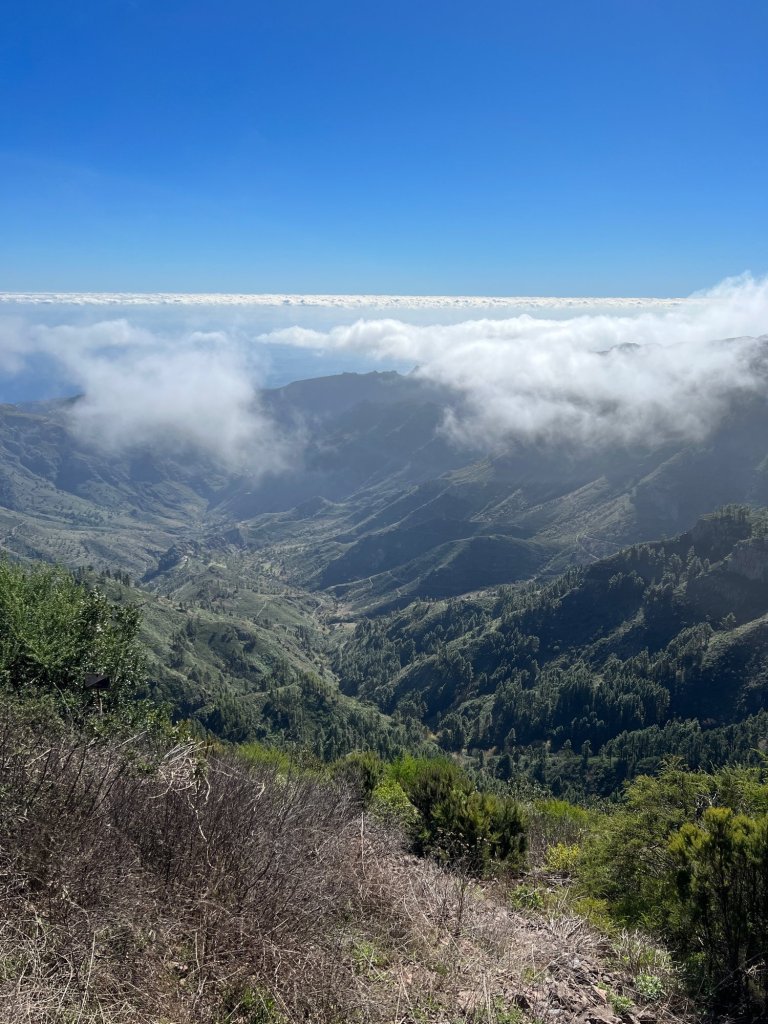
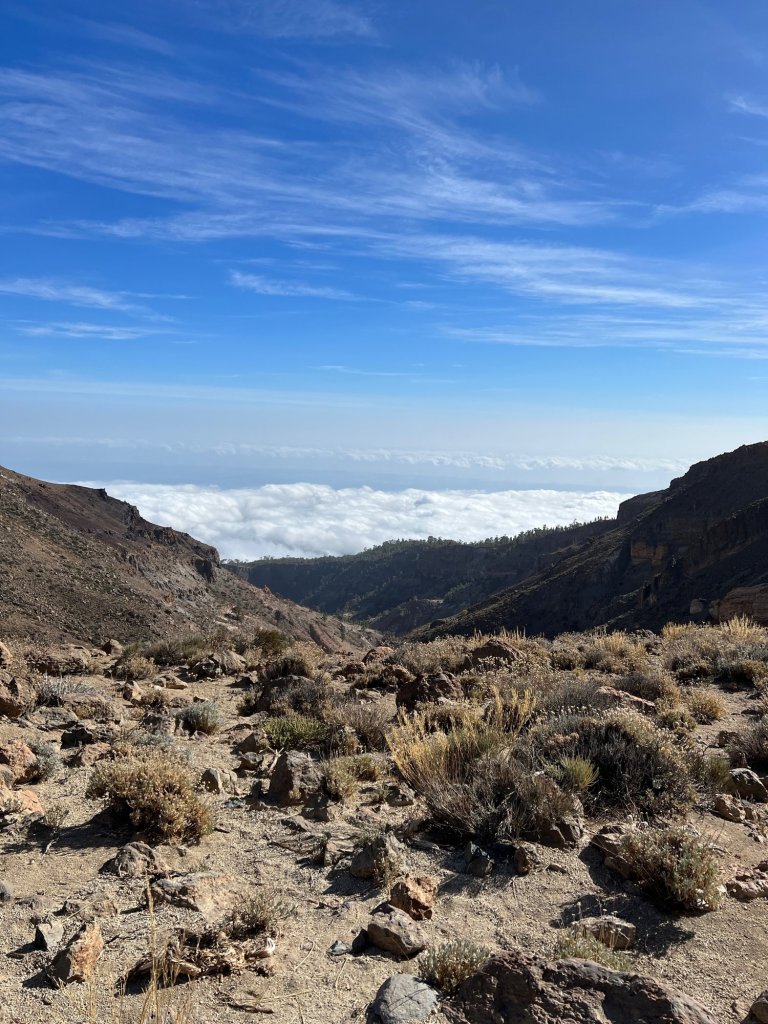
    Tenerife (93.5km / 58 miles) (3,830m / 12565.62ft of elevation) turns out to be 4 days (official guide recommends 5) on the trail, with a day either side due to logistics and due to the fact the trail starts partially inland compared to its counterparts. The first 2 stages on Tenerife, beginning in the small village of La Esperanza, take you through a pine-forested trail. There are a few sections that allow you to glimpse a view of Mount Teide, and an epic cloud inversion that usually sits below the tree lines. I had a heavy pack given there is little natural water on the trail (I found 2 water taps) and no food services on the first 3 stages. Combined with the decent amount of incline on the first 2 stages, I found these tiring. Stage 3 goes through the epic Teide national park, which sits in the crater of an old extinct massive volcano. The landscape is extremely unique, once again bringing martian-like planet vibes. I combined stage 4 and 5 into one stage; which descends down from Teide national park, passing the highest situated town on Spanish territory; Vilaflor, and finishing in the village of Arona. I manage to get a meal of grilled local goat’s cheese and goat stew to celebrate my final night on Tenerife.
    La Gomera – Island 5

    • 2 days
    • 45km (28 miles)

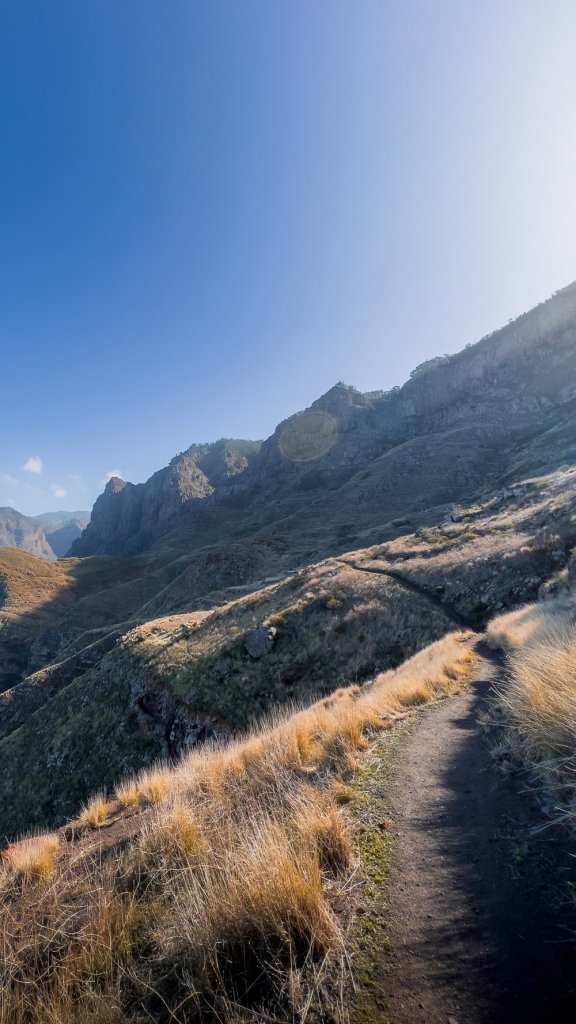
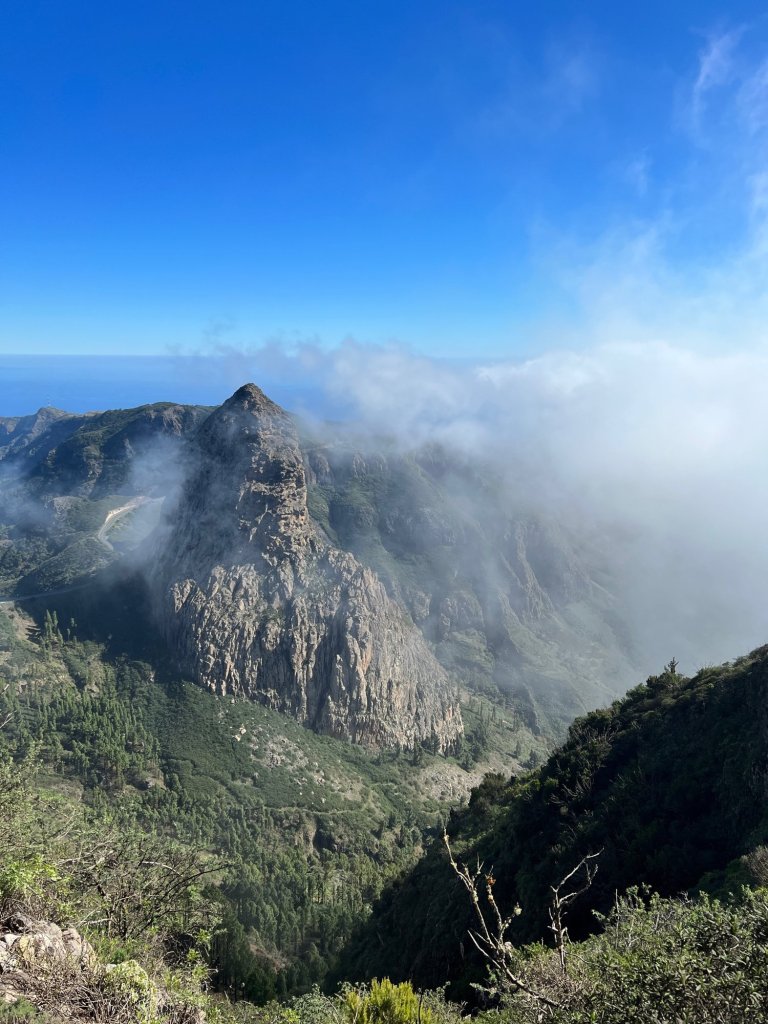
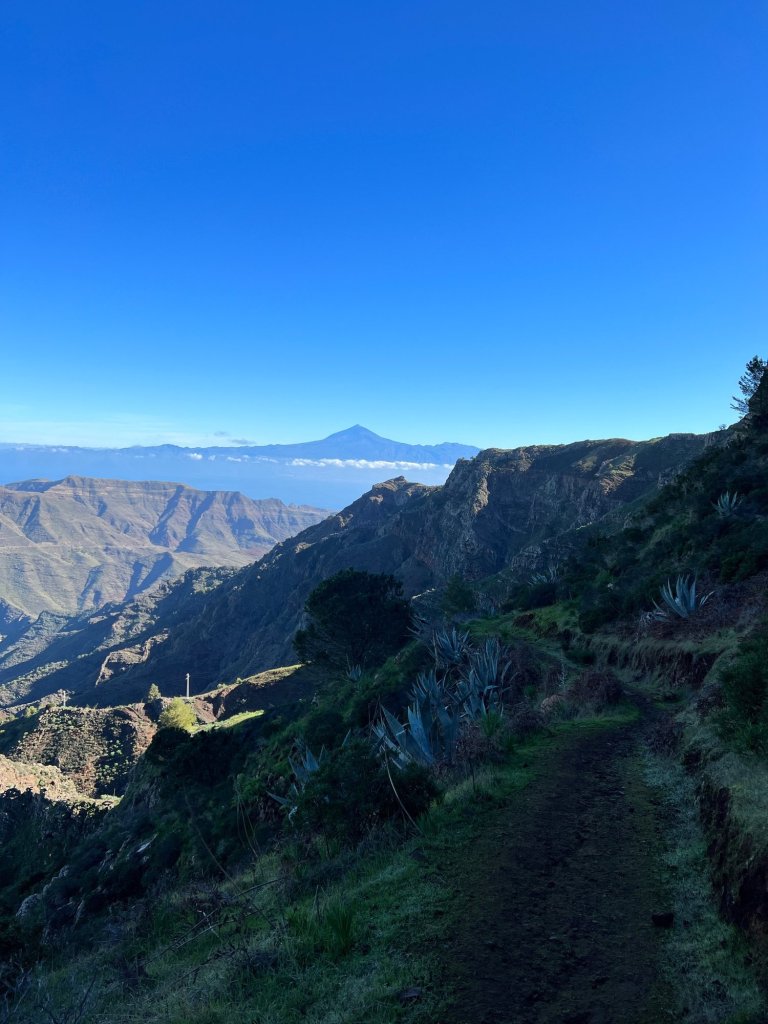
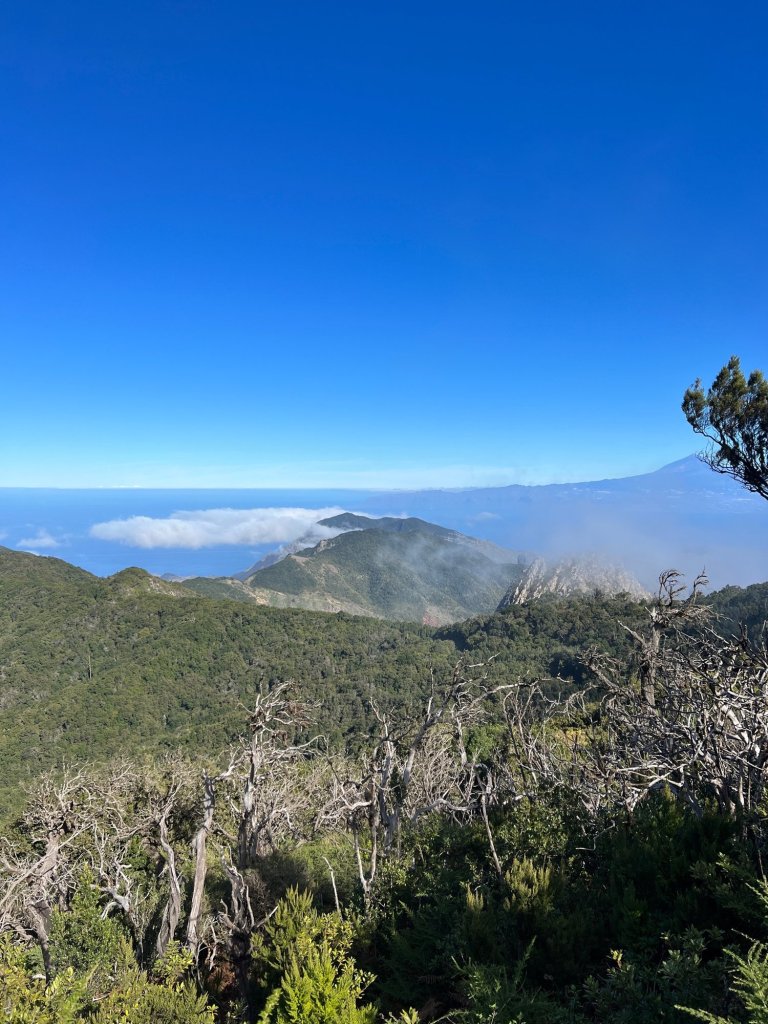
    La Gomera, island number 5 is smaller than others, at 45.5km / 28.3 miles, and is completed in 2 days. I stayed in a bnb in the town of San Sebastián on arrival via ferry from Tenerife. Day 1 sees you walking out of the town up into the central highlands of the island. The vegetation is far greener and rain forest much denser than that of others, thanks to the larger volumes of water the highlands receive from cloud cover from the trade winds.

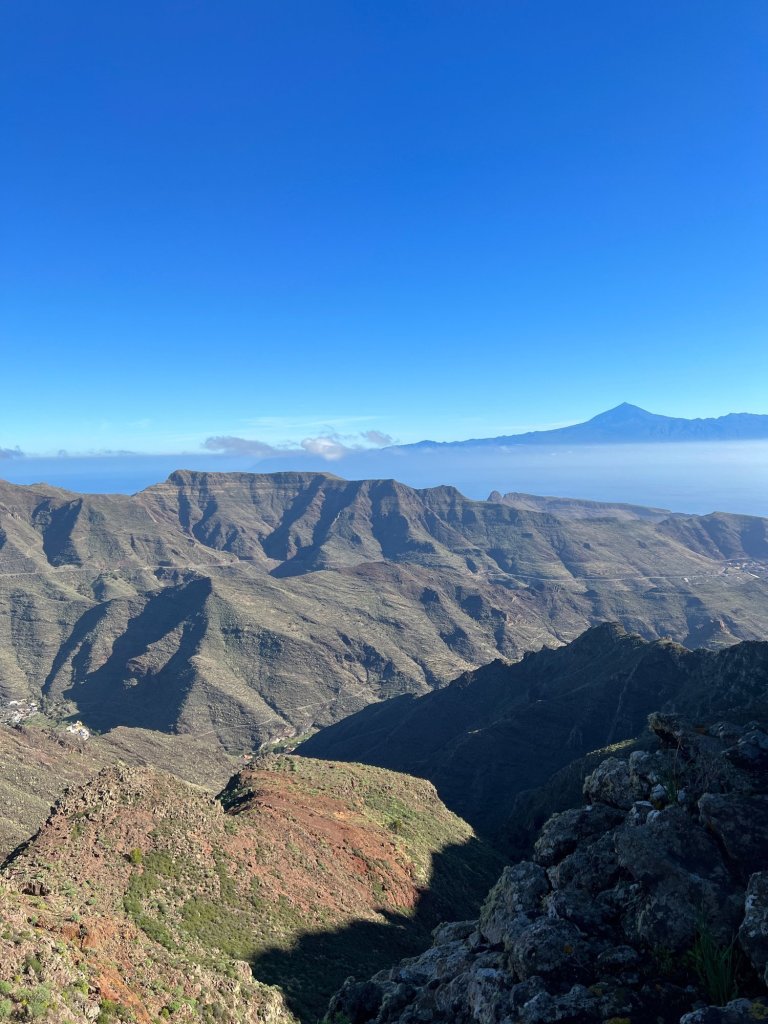
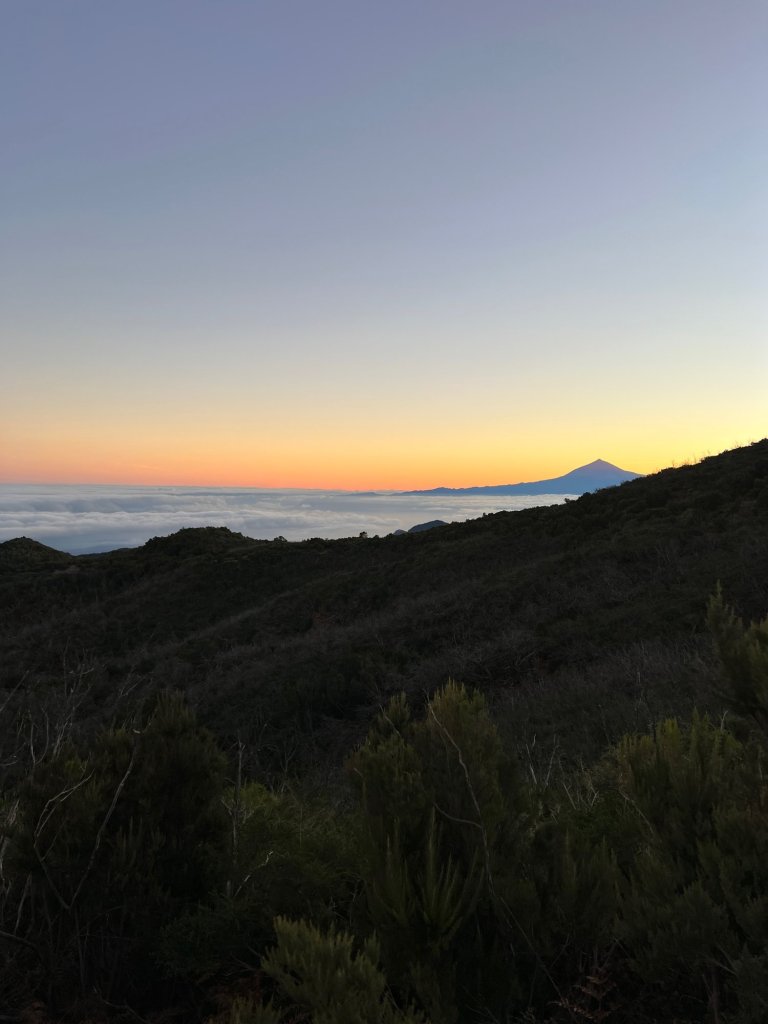
    I wild camp overnight with a stunning view back over of mount Teide from my previous island, Tenerife. The next morning I wake up before sunrise to pack up and set off with a good pace with intention of reaching Vallehermoso. This section sees you descending back down from the highland centre into the lower valleys, passing through a few quiet villages and coastal cliff views. on finishing the trail and reaching Vallehermoso I get a bus back to the trail head town of San Sebastián, with the plan of getting a ferry the following day.
    La Palma & El Hierro (Islands 6 & 7)

    Due to a volcanic eruption I was unable to trek La Palma and was unable to visit the small island of El Hierro (40km) given travel logistics and time constraints. Thus, I was unable to complete the GR131 in its full entirety, and finished my hike after La Gomera at 456km / 283 miles.

    Overall I really enjoyed the wide variety of landscapes and ecosystems in such a small area. Passing across desert, alpine pine forests, mountains, volcanoes and coastal sections all in one trail was an amazing experience. Yet the logistical challenges I failed to take into consideration, particularly getting from one island to another via ferry, meant the time needed was unnecessarily longer. As a result; I ran out of time and could not complete the trail in its entirety (partly also due to the volcano on La Palma). The challenge of finding decent wild camping spots is also especially hard on certain sections. But overall I would highly recommend this trail for anyone looking for a winter long distance thru-hike who has 3-4 weeks on their hands to complete it.

    For more content on the Canary Islands and the GR131, check out my videos below:
  • The Skye Trail: Isle of Skye, Scotland

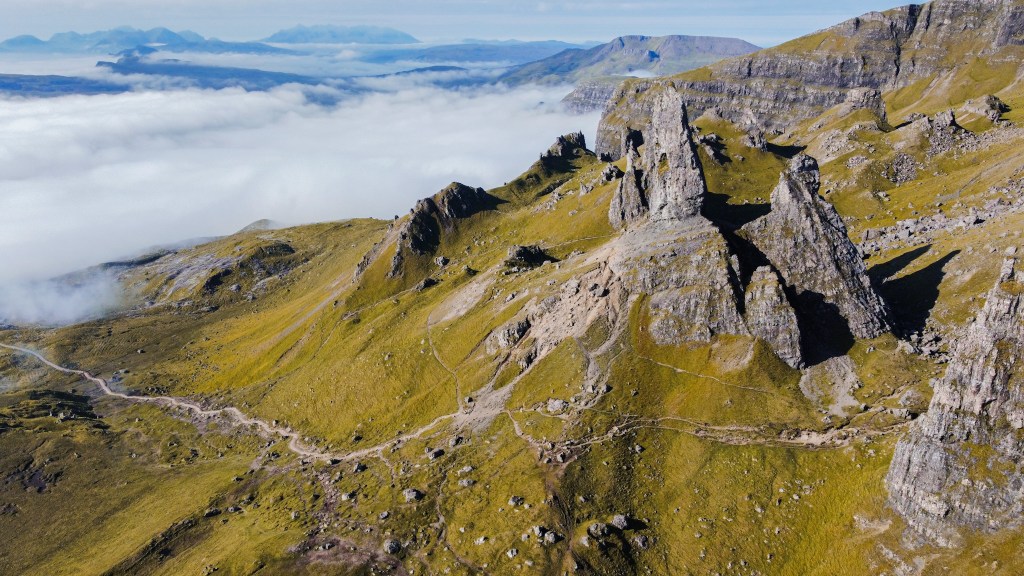
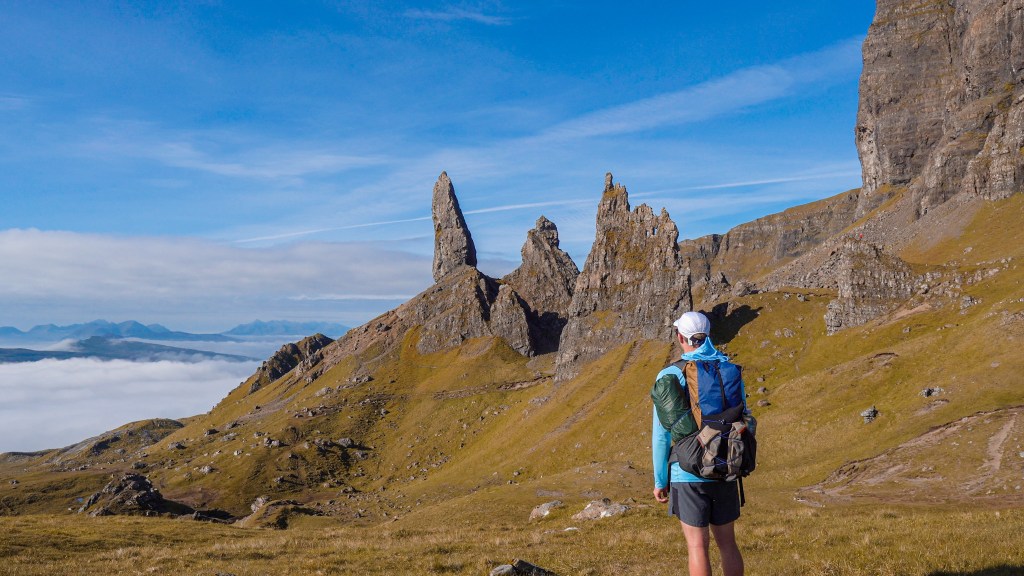
    The Old Man of Storr, a prominent highlight on the Skye Trail.

    Key Details:

    • Length: 128 km (80 miles) approx.
    • Starting Point: Rubha Hunish (North).
    • Ending Point: Broadford (South).
    • Typical Duration: 6-7 days.

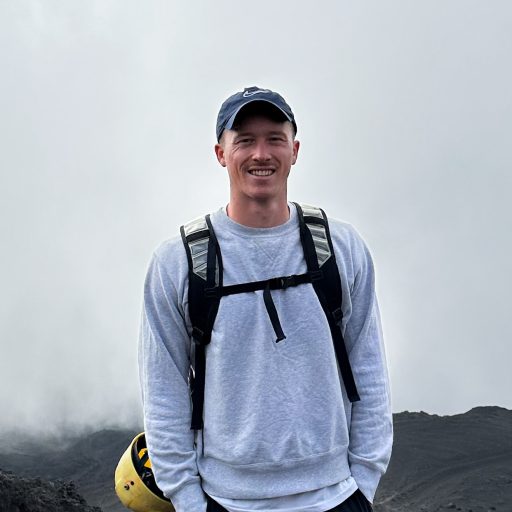
    As an Aussie who grew up in rural Queensland I’ve always been attracted to the beautiful wilderness in this amazing country of Scotland. I first visited in the summer of 2020 and then again on this trip (end of June/early July 2021. After visiting Skye on our first Scotland trip I made a promise to myself I would return to tackle this trail. Below is my story about being on the trail and my experiences. I completed this trail over 6 days, wild camping for 4 nights and spending 1 night in a bnb in Portree. I moved quite slow as I was filming and taking some landscape photography for most of the time.

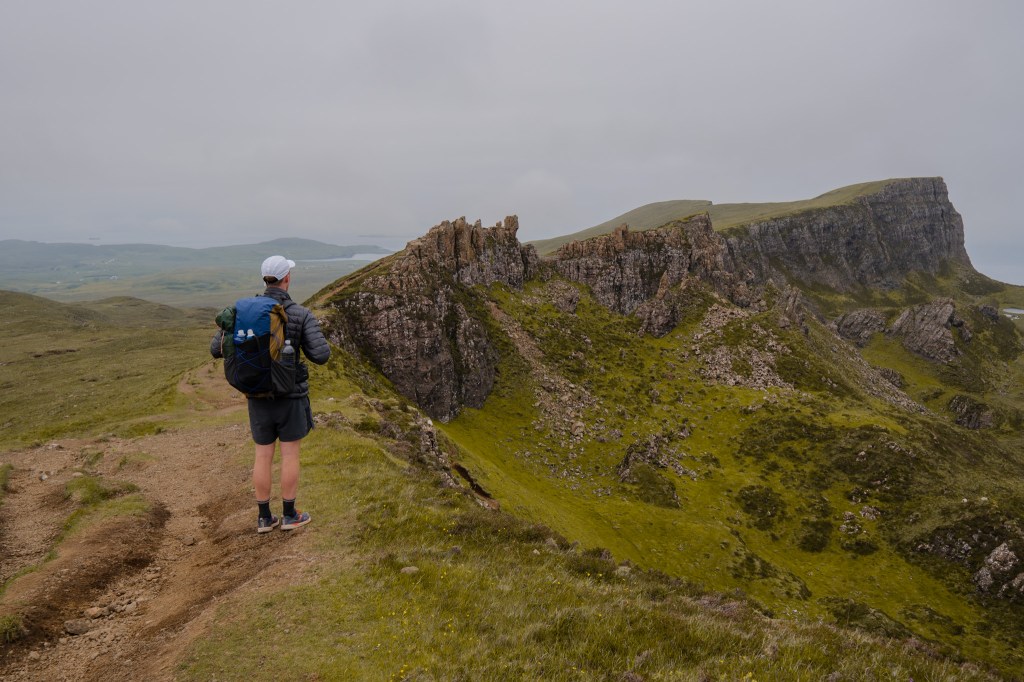
    Looking north along ‘the ridge’, my favourite section of the hike.

    Pre-Hike

    After a miserable winter working in the ICU of a north London hospita during covid lockdowns l I knew I had to spend my summer in the outdoors tackling a few trails. At the end of June I quit my full-time physio job as I was due to start a new role in early August, leaving me with 6 weeks to run-amock. I had a few trails in mind that I wanted to tackle over the summer, but ever since my first trip to Skye I have felt something drawing me back…decision made. I booked everything last minute and made my way from the manic chaos of London via plane to Inverness. I had a caffeine hit at Velocity cafe before I got the CityLink bus to Skye. Clear skies and a decent forecast left me with quite a buzz (or maybe that was just the coffee). I arrived to the wonderful Shiloh B&B run by Sheila and Malky in Breakish, who were kind enough to hold onto a bag of fresh clothes for my return the following week. I ate at the Red Skye restaurant in Breakish (an amazing 3 course meal – too much for one person but I’ll use the excuse of energy stacking) and probably 4 too many wines. I stumbled home to call it a night and await the big day.

    The beginning of the trail at the northern tip of the island – Rubha Hunish.

    Day 1 (Duntulm to the Quairang)

    • 22km (13.8 miles)
    • 948m of Elevation

    The first day started with a 3km walk to the Broadford post office bus shelter to get the 52 bus to the isle’s capital, Portree, at 8am. At the bus stop I got speaking to a Hungarian fellow based in Cheshire who was also doing the trail. We got to Portree, paid a quick visit to the great Inside Out camping store for some supplies and gas, and then got the next bus to the little red phone box at the the trail head at the north eastern tip of the island in Duntulm. We set off towards our first major landmark: the old coastguard bothy (a bothy is a small unmanned house/structure, dotted throughout Scotland’s wilderness for hikers and travellers to sleep and seek shelter in) and the Rubha Hunnish headland. 

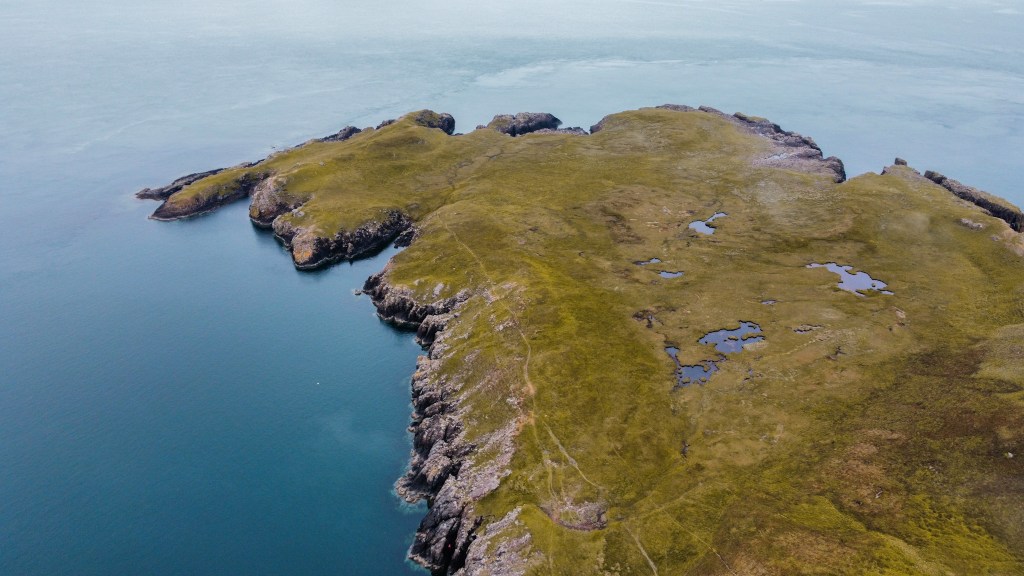
    Looking out over the stunning headland at Rubha Hunish.

    Next was walking along the coast towards the small settlement of Flodigarry. Previously, the Flodigarry Hostel would make a very inviting establishment for a drink or a bed for a wary traveller tackling the trail, but due to reasons beyond control the hostel was unfortunately not operating. We stopped briefly at the Flodigarry hotel instead for a quick pint, before we pushed on and ascended up into the Quairang. The Quairang is an ancient landslip which has resulted in a very unique landscape and ridge formation. We pushed up and along, before we descended slightly, 20 minutes or so prior to the Quairang parking area, where we found some flat ground that we would camp on (note in Scotland you have the ability to wild camp where you like – just remember: leave no trace).

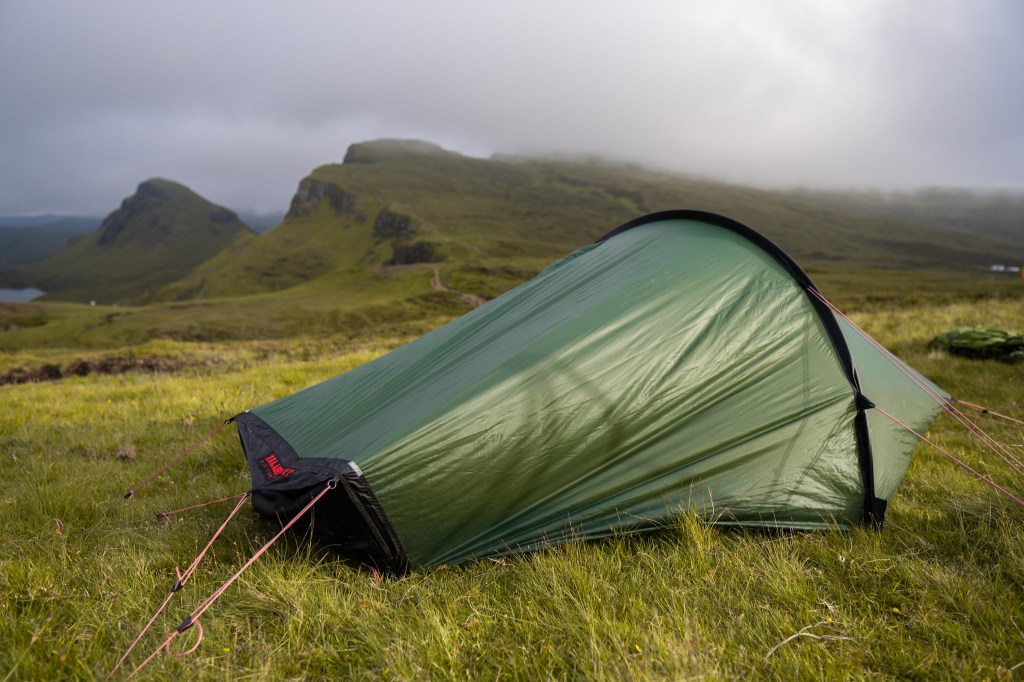
    Night 1 wild camp – at the base of the epic Quairang.
    Looking back over the Quairang.

    Day 2 (The Quairang to the Storr)

    • 23km (14.5 miles)
    • 1,316m of Elevation

    The next section, in my opinion, would be the toughest. We would traverse the infamous Trotternish ridge, which like the Quairang, is a giant, ancient landslip extending from the north to south. We were initially met with thick fog which would condense into rain and resultantly terrible visibility. We were also slowed down considerably by the multiple bog pits that we had to cross. It should be noted that a path to follow, and any form of way-marking, is mostly non-existent along this section. Luckily, I was using the Alltrails app on my phone and had downloaded the Skye Trail map for offline use with GPS. Without it, we would never of completed the section through the thick fog and rain..

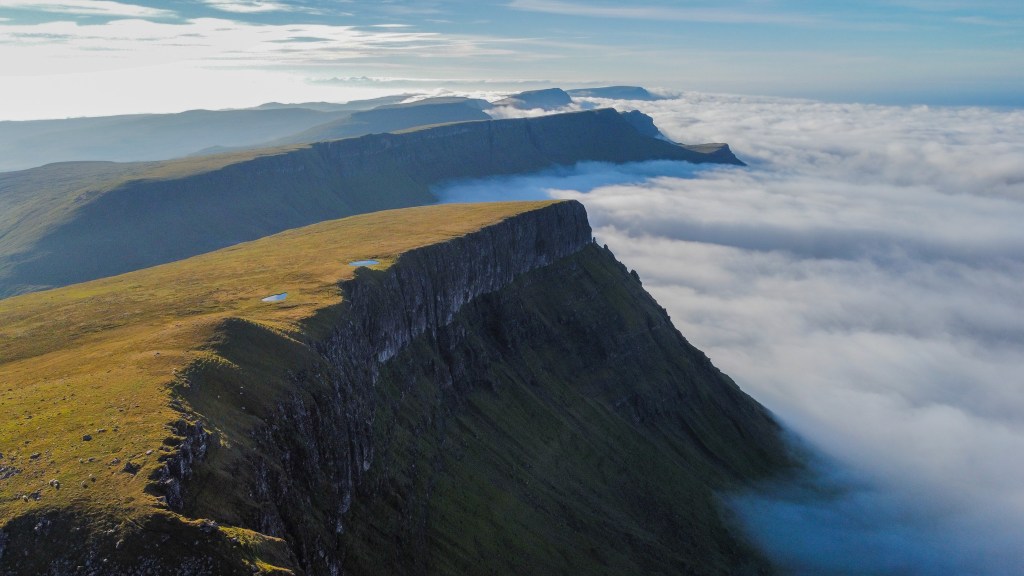
    After some time though, the rain dissipated and the fog began to clear, and we were gifted with some of the most amazing views of the ridge and the surrounding landscape.

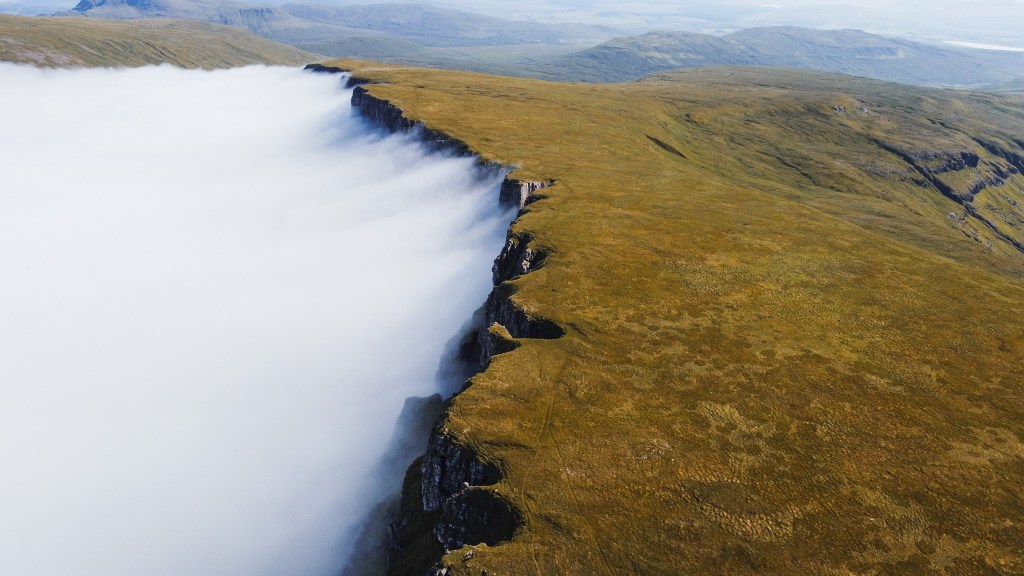
    The stunning ridge walk with an inverted cloud formation.
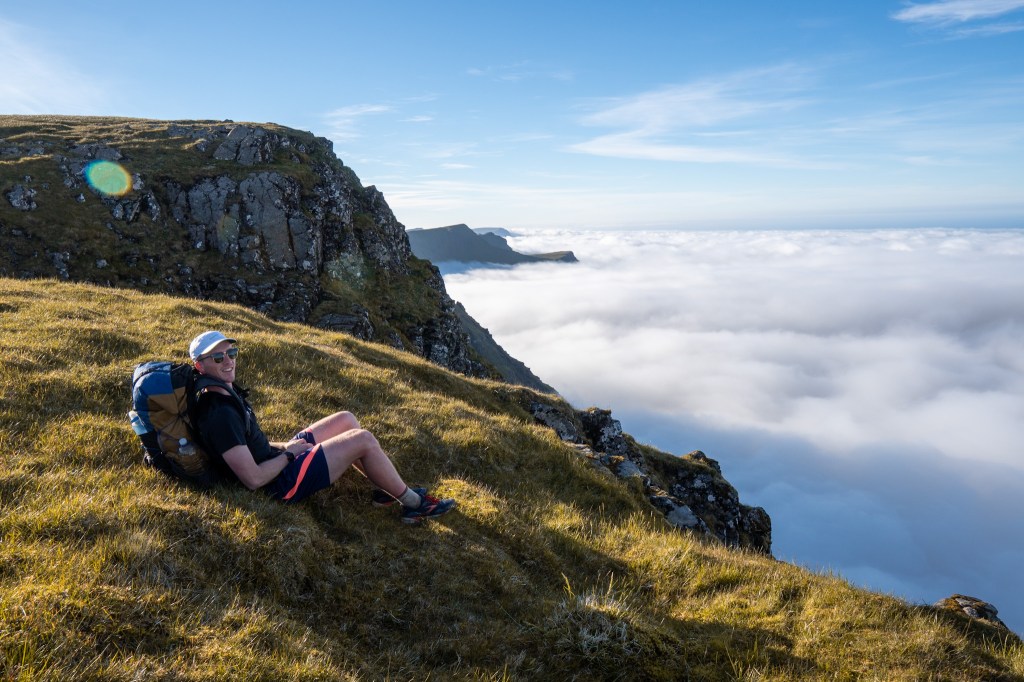
    Enjoying the views.

    After many summits accompanied by amazing views as you can see above, we started coming closer to the Storr; a massive rocky hill section of the ridge. We descended slightly and found a spot to camp for the night.

    After a tiresome day of difficult navigation, rain, bog and a decent amount of elevation we we exhausted, and crashed quite quickly after our freeze dried meals.

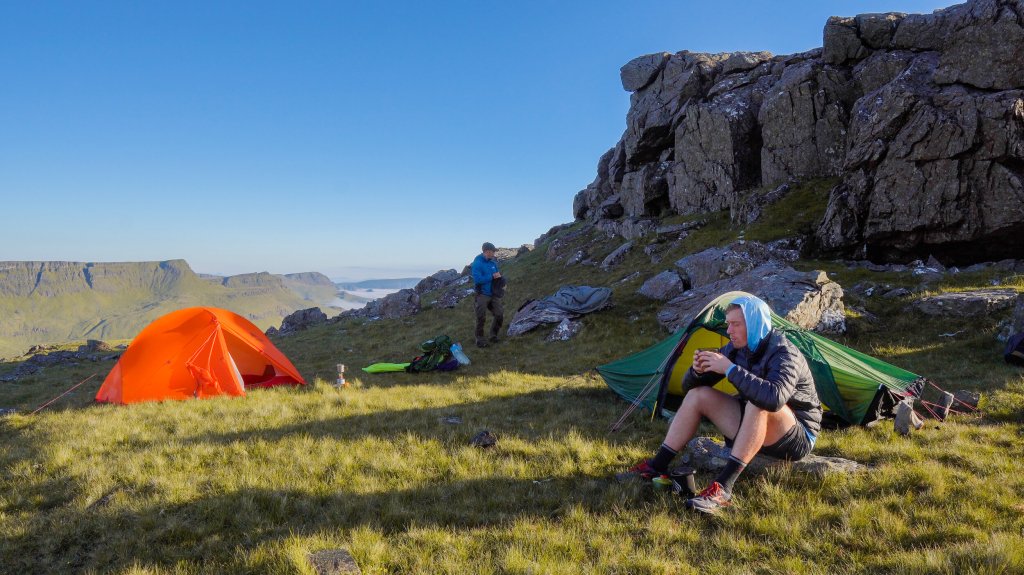
    Wild camp 2 – on the ridge, close by to the Storr.

    Day 3 (The Storr to Portree)

    • 18km (11.2 miles)
    • 528m of Elevation

    The next morning we were gifted with an easier days walk compared to the previous. We would descend down to the Needle of the Storr and then down further to a lower ridge walk that would take us to Portree. We had a late start that was accompanied by a few coffees, but we soon got going in sunny weather. Our first stop was the Needle which we had mostly to ourselves, surprising given normally there would be tourists everywhere.

    The needle of the Old Man of Storr.

    Our next section was to descend down to the carpark for the Needle and walking on the road for 20 or so minutes before we would then move back onto the trail and begin to ascend a lower ridge-line that stretches along the coast. The sun was beaming and we were loving life.

    On reaching Portree we treated ourselves to a good serving of fish and chips, followed by some good coffee and cake, all topped off with a few pints at the Granary. After this we parted to our respective sleeping quarters for the night; me at a bnb I had pre-booked and Lasslo at the Hostel in the centre of town.

    At the base of the Red Cuililns.

    Day 4 (Portree to Sligachan + Exploring the Cuilins)

    • 27km (17 miles)
    • 755m of Elevation

    The next section of the trail is probably the least pleasant in terms of views. It involves a large section of road walking after leaving Portree and slow moving over rocks as you travel along the shores of a Loch. The end destination is the small settlement of Sligachan which has a few shops and is situated at the base of the Red and White Cuilins, 2 mountain ranges that we would pass through the following day. Once we had set up camp along the river in Sligachan, I went out to do a little bit of exploring at the base of the Red Cuilins, before having a quick dip in the river.

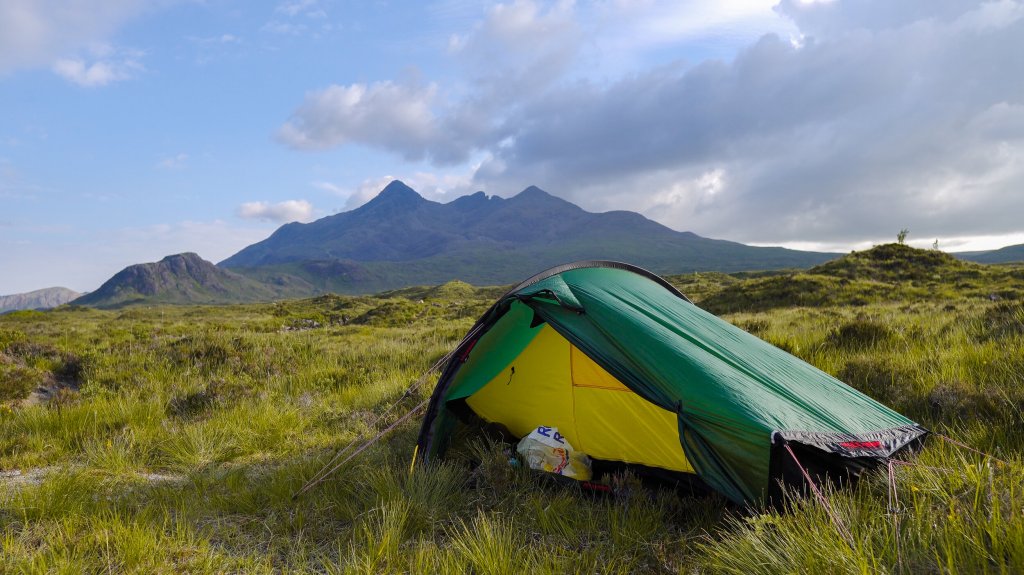
    Wild camp 3 – base of the Cuillins.

    Day 5 (Sligachan to Elgol to Torrin)

    • 34.5km (21 miles)

    We soon learnt that the next few days would potentially have some wetter weather. We discussed our options and the possibility of finishing the trail early. The official guidebook recommends 7 days of walking. Lasslo was determined to finish today (day 5), whilst I knew I would take longer due to my filming, and would instead aim to finish tomorrow (day 6). With that, we said our goodbyes to each other, after sharing such a great time on the trail together.

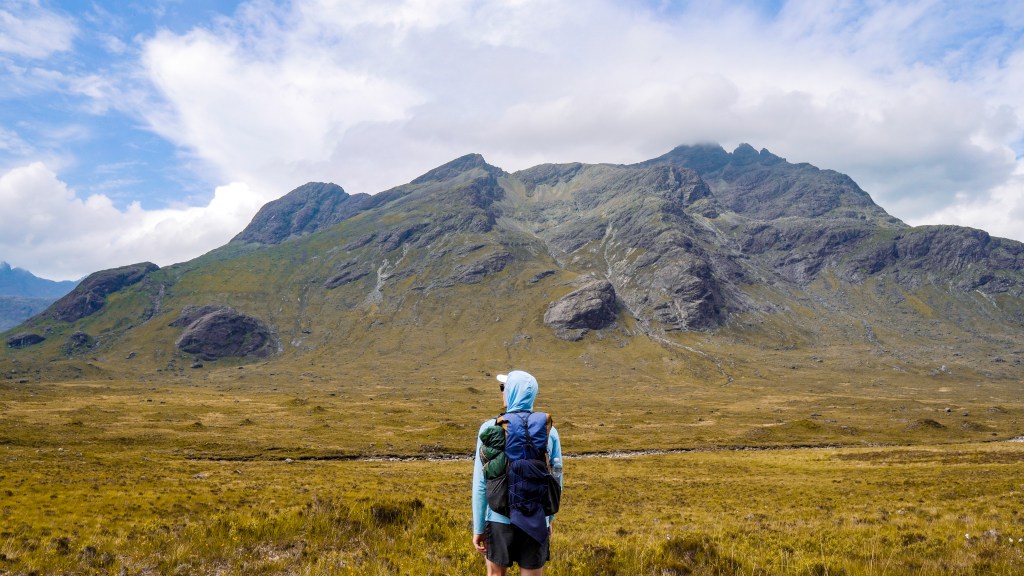
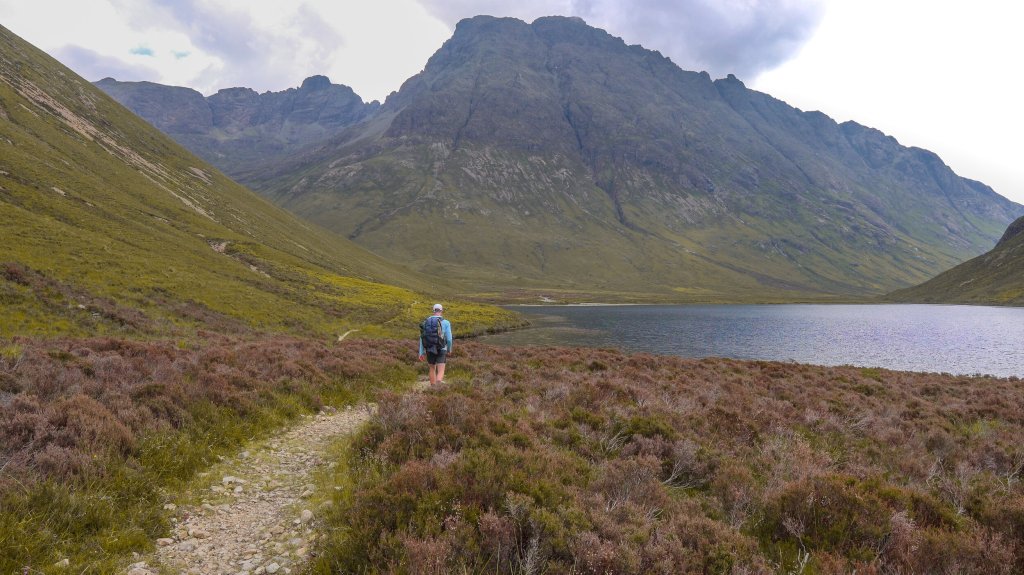
    Walking through the valley beneath the Cuillins.

    My day 5 would consist of walking to the small town of Elgol, where I planned to stop at the small shop for snacks and coffee to help me push on to the small town of Torrin to wild camp at. Sligachan to Elgol included walking between the White and Red Cuilin mountain ranges, which was very scenic. Following this there is a stretch of coastal hiking alongside a cliff, which in poor weather could be questionable. There was quite a bit of overgrowth which made for slow walking, and this section felt like a slog.

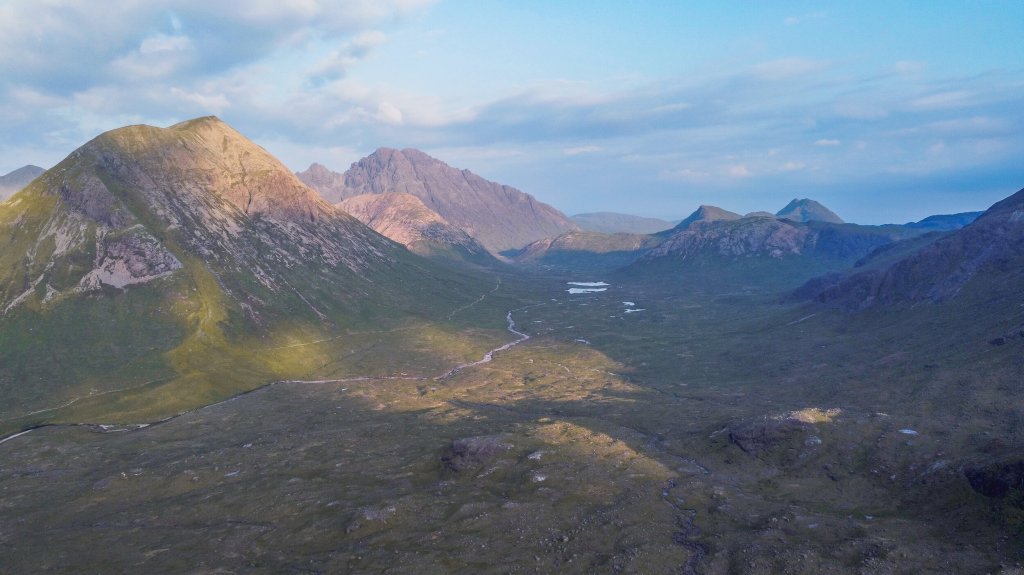
    A better view of the valley between the mountains.

    Reaching Elgol was a welcoming break after the coastal section, where I sat at the local small shop run by a young lass from one of the neighbouring villages. I grabbed a flat white with an extra shot, 3 bars of chocolate and some sandwiches and sat in silence whilst I devoured them. I still had another section to battle through, usually completed on a seperate day. But I still felt fresh and the long summer daylight hours of Scotland would permit these sorts of long days on the trail.

    The next section, Elgol to Torrin, is an interesting one. It is a mix of road walking but combined with some beautiful scenery as it winds around the other side of the White Cuilins. I eventually started to descend slowly towards the town of Torrin, where I spotted a suitable wild camping spot on the the bank by the Loch.

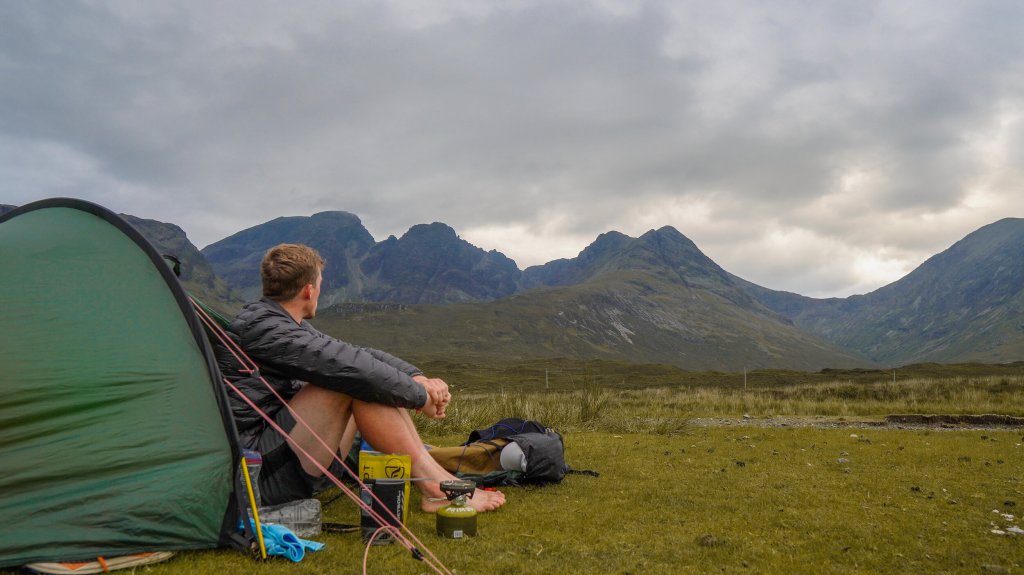
    Wild camp 4 – close to the village of Torrin, by the Loch.

    Day 6 (Torrin to Broadford)

    20km (12.5 miles)

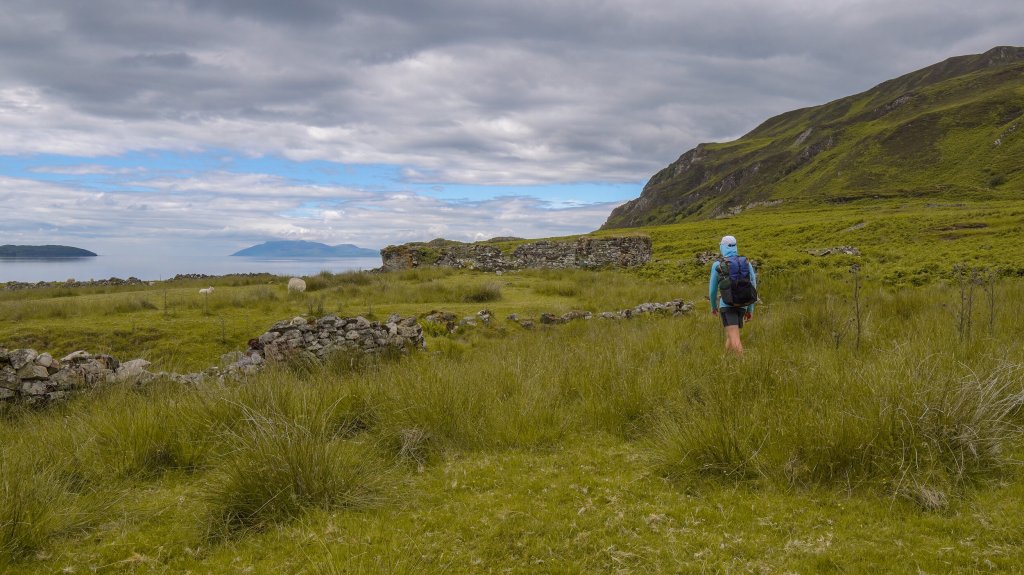
    And my final day, Torrin to Broadford, was quite a straightforward half-day hike along the coast, passing through the ruins of Boreraig, an old settlement that was affected by the Highland Clearances. It was quite an eary experience walking through the ruins, and a sad reminder of those who were displaced from their homes some hundred years ago.

    Walking past the old houses and settlements, with only foundations remaining.

    The final stretch to Broadford was an easy incline and then a long, windy path, that eventually joined a road that took me to the outskirts of Broadford, the offical end of the trail. After 6 days, 5 nights, 91 miles and 5,336m of elevation, my hike was concluded.

    Though a challenging hike, I thoroughly enjoyed it, most notably the first half of the trek, particularly along the Quairang and the Trotternish Ridge. it is more isolated then say the West Highland Way, and hikers could find themselves in a sticky situation along the ridge in poor weather. Though the scenery and views are ubmatched, which is why this is one of my favourite hikes to date.

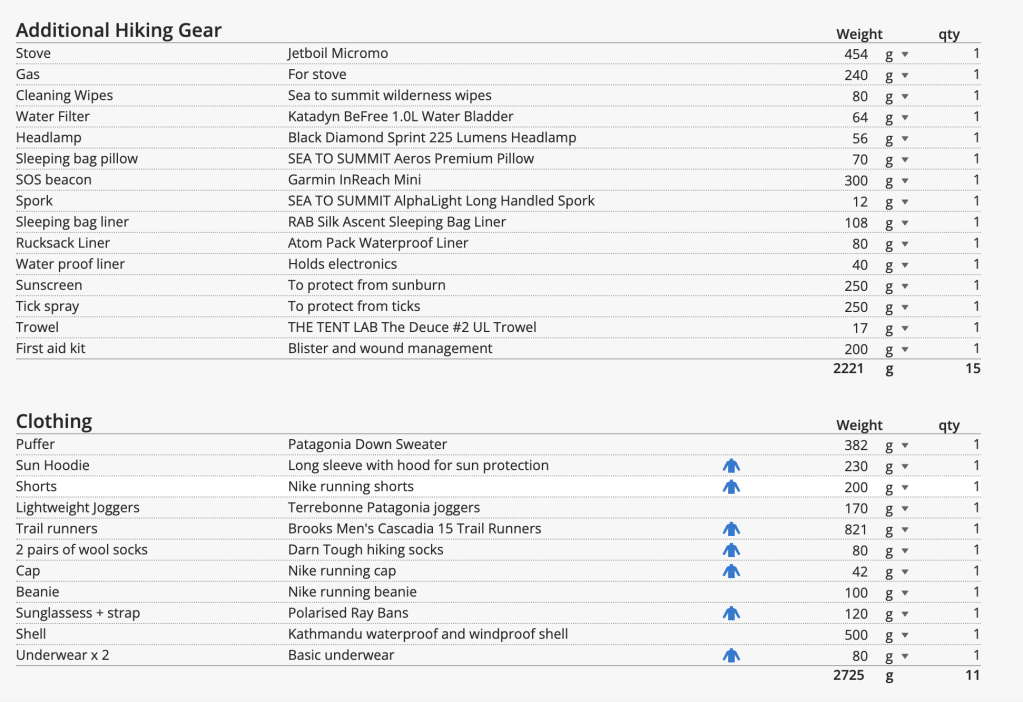
    Below you can find some more details on my stats for the hike and gear used and weight.